2.2.1. Logic board (FPGA)
2.2.1.1. Introduction
2.2.1.2. Versions
Main versions of logic boards and core features:
FPGA V1 (https://github.com/jhu-cisst/FPGA1394)
until to 2015
based on FPGA Xilinx Spartan 6
two FireWire ports for daisy-chaining
See
FPGA V2 (https://github.com/jhu-cisst/FPGA1394)
from 2016 to 2023
based on FPGA Xilinx Spartan 6
added one Ethernet port (100MB)
FPGA V3 (https://github.com/jhu-cisst/FPGA1394V3)
from 2023
based on Xilinx Zynq System on Chip (SoC), XC7Z020
embedded dual-core ARM 32 processor
added another Ethernet port (two ports, 1GB)
See also the controller versions page to determine which FPGA version is used.
2.2.1.3. Number of FPGAs
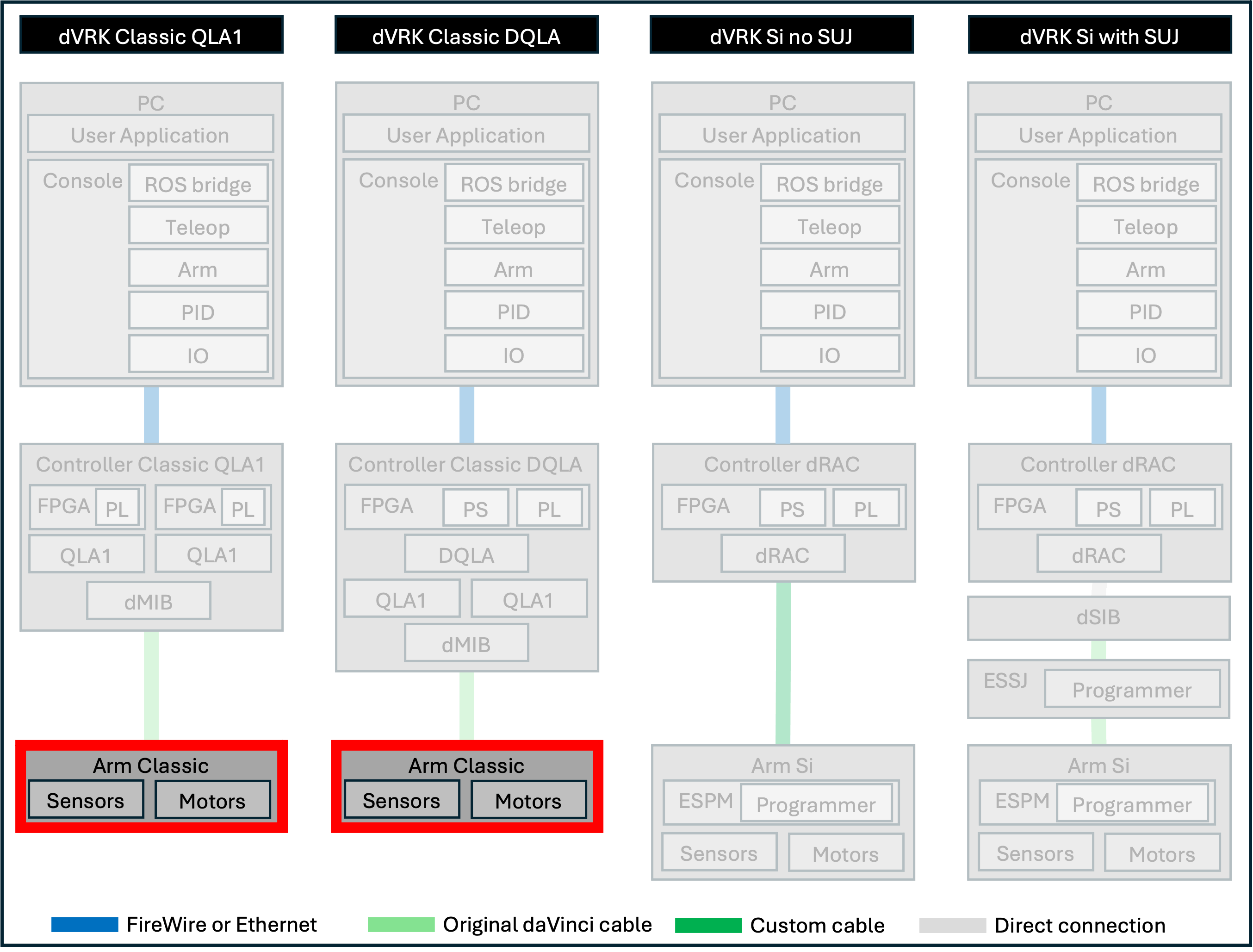
The number of FPGAs (and therefore number of FireWire or Ethernet nodes) depends on the controllers versions and the number of arms. The dVRK Classic controllers with FPGA V1 or V2 each have two logic boards (aka QLA1). The dVRK Classic controllers with FPGA V3 (DQLA), the Classic SUJ controllers (QLA1) and dVRK Si controllers (dRA1) all use a single logic board. There is no dVRK-specific FPGA board used for the Si SUJ.
In practice:
The initial dVRK kits were composed of two PSMs and two MTMs. We used 4 dVRK Classic controllers so a total of 8 dVRK FPGAs.
For a full first generation da Vinci with the dVRK controllers V1 or V2, we have two MTMs, one ECM, three PSMs and the SUJ. So six arm controllers using 12 logic boards and one more for the Classic SUJ controller for a grand total of 13 FPGAs.
More recent controllers use less FPGA boards so a full Si patient cart with two Classic MTMs require only 6 FPGAs.
Note
The expected number of boards is useful when testing your physical connections.