2.1.1.5. Set Up Joints
On the patient cart, the active arms (two to three PSMs and one ECM) are mounted on a set of passive arms. These passive arms (SUJ) are designed so that each active arm can have its RCM (remote center of motion) placed at the entry point on the patient. Shown below is a model of a Classic patient cart with and without the active arms.
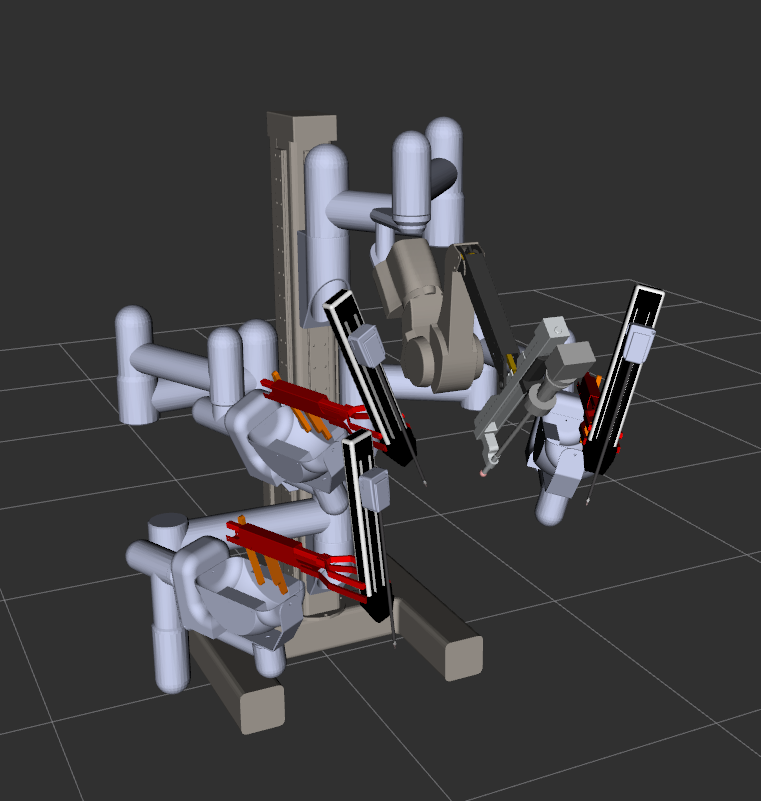
da Vinci Classic, full patient cart in RViz
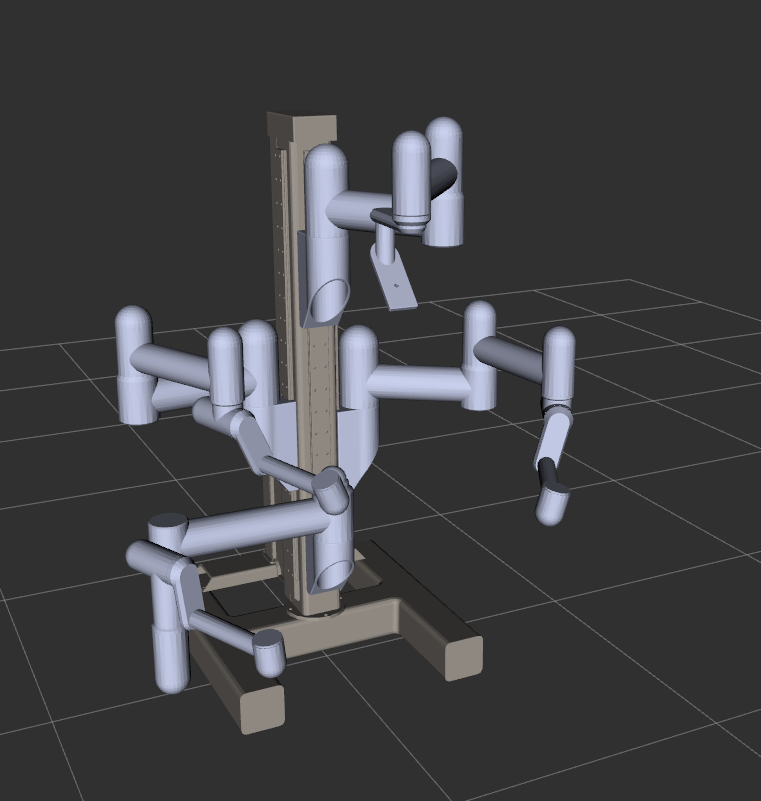
da Vinci Classic, SUJ only in RViz
Basic information:
The patient cart is on wheels, so it can be moved in and out the operation room
There are three to four passive arms, one to hold the ECM (SUJ-ECM) and two to three to hold the PSMs (SUJ-PSM1, SUJ-PSM2 and optionally SUJ-PSM3)
Each joint has an electric brake. The brakes are controlled per arm. For example, all the brakes on SUJ-PSM1 are released at the same time
SUJ-PSM1 and SUJ-PSM2 have an extra button to control the brakes on the passive arm itself. All the active arms also have a dedicated button to release the brakes, but this signal is handled by the arm controller, not the SUJ controller

da Vinci Classic, clutch/brake button on SUJ for PSM1 and PSM2
All the passive arms (except PSM-SUJ3) have counterweights in the central column, so they can be moved up and down with minimal effort
The optional SUJ-PSM3 is mounted on front of the column and doesn’t have a vertical counterweight (maybe the third PSM was an afterthought). Instead, there is a lift motor mounted at the base of the cart
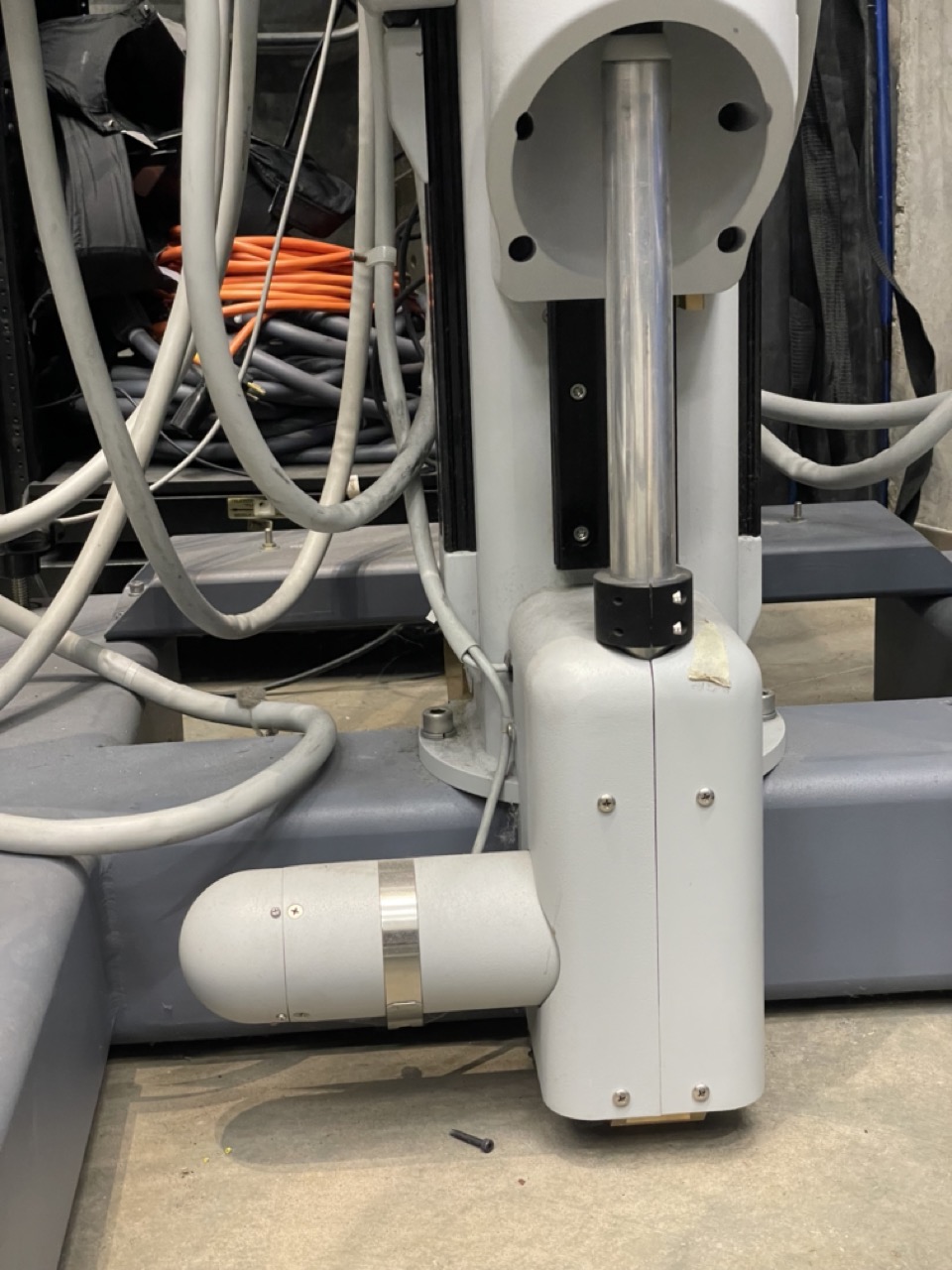
da Vinci Classic, SUJ for PSM3 lift motor
There is a button attached with a Velcro strap to the active arm PSM3. This button can be toggled up or down to control the height of the SUJ-PSM3

da Vinci Classic, SUJ for PSM3 lift button