2.1.3. Instruments
2.1.3.1. Introduction
On the patient’s side, the PSM arms are designed to use interchangeable instruments depending on the task (e.g. needle driver, scissor, grasper…). These instruments are sterilizable and disposable. Each instrument has a maximum number of uses based on its mechanical properties and expected usage. After multiple uses (and required sterilization between uses), the internal mechanisms are more likely to break. This can lead to injuries, hence a set maximum number of “lives” per instrument.
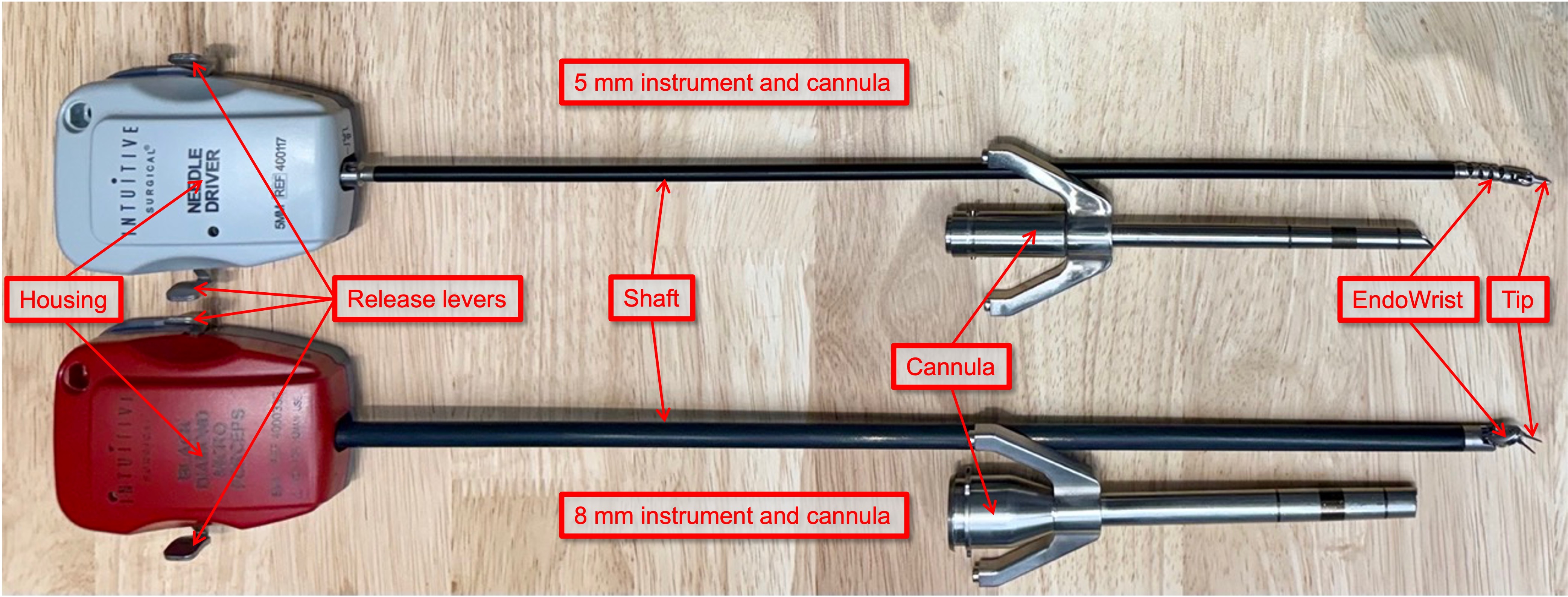
Examples of da Vinci Classic instruments, 8 and 5 mm diameter
The main parts of a da Vinci instrument are:
disc plate, back of the instrument with 4 discs that will mate with the sterile adapter and the actuators
housing, plastic cover for the mechanisms used to transmit the motion from the actuators to the joints
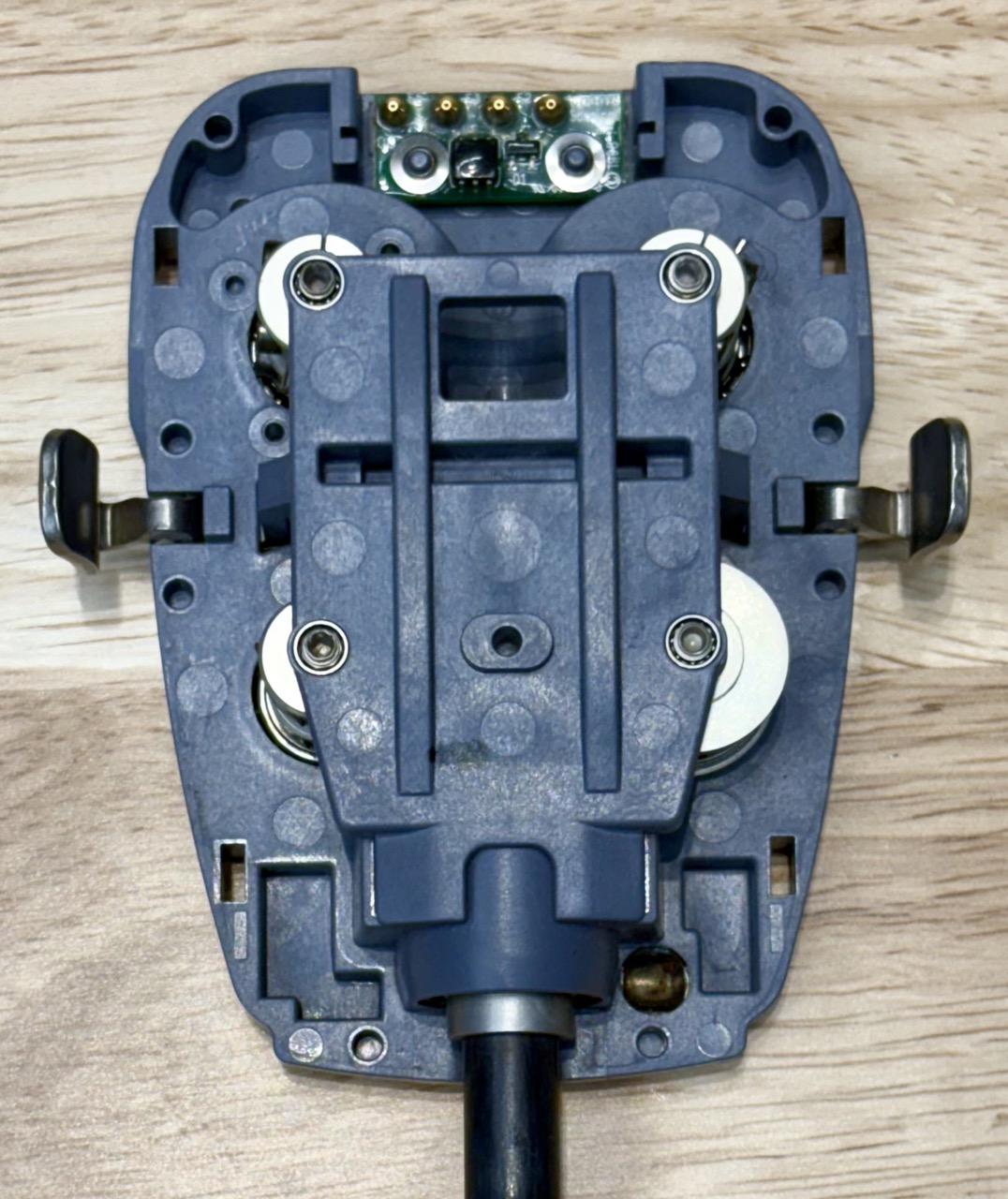
Instrument’s base without its cover
two release levers, used to remove the instrument from the sterile adapter
rotating shaft, long tube containing cables/rodes to transmit the motion for the last 3 actuators
an articulated wrist with 2 degrees of freedom (EndoWrist)
a tip, articulated (scissor, grasper, forceps…) or not (hook, spatula…)
Note
Catalogs of instruments can be found on the web or in the References - Links - Intuitive Surgical section.
2.1.3.2. Part number
Instruments can be identified using their part number:
First 6 digits: base part number
Dash ‘-’
Last 2 digits: version number
Optional “T” letter: training instrument, same mechanical parameters but can be used more times (on clinical systems, irrelevant on dVRK)
Letter Revision: ‘A-Z’
Example: 420093-03T Rev B
2.1.3.3. Classic vs S/Si
The main differences between the first generation of instruments (Classic) and the second (S and Si) are:
Model number: both generation of instruments are identified by a 6 digits number. Classic instrument model numbers start with 400 while S/Si instrument model numbers start with 420. For example, a classic large needle driver (LND) uses 400006 while a S/Si LND uses 420006.
Length: S/Si instruments are longer. If you are curious, you should look at S/Si PSM arms, they have an interesting two stage translation link for insertion. This allows to “collapse” the arm when the instrument is inserted and reduce the risk of collision between the arms outside the patient. For example, the Classic LND has a shaft that measures 41.62 cm while the S/Si LND has a 46.7 cm shaft (5.08 cm longer).
Shape of the instrument disk plate and sterile adapter: since both the Classic and S/Si were commercially available at the same time, the instruments have a different base-plate to make sure a Classic instrument can’t be accidentally inserted on a S/Si PSM and a S/Si instrument can’t be inserted on a Classic PSM.

Housing differences between Classic (left) and S/Si instruments (right)

Disc plate differences between Classic (left) and S/Si instruments (right)
Note
Since the da Vinci classic has been retired in 2012, it is getting harder to find instruments for this model. Fortunately, when Intuitive Surgical introduced the da Vinci S (and later Si) the instruments remained almost unchanged, so it is possible to use S/Si instruments with the dVRK Classic PSMs with a modified Classic sterile adapter. Classic instruments can not be used on the dVRK-Si.
2.1.3.4. EndoWrist
The wrist design is pretty much the same between the Classic and Si instruments. Instruments actually share their names and serial’s number last 3 digits across generations. A Large Needle Driver for the da Vinci Classic has the serial number 400006 while the Large Needle Driver for the da Vinci S and Si has the serial number 420006.
The following pictures show different wrist mechanisms.

da Vinci DeBakey grasper wrist and tip
For the smaller diameter instruments, the wrist is composed of 4 stacked disks. This is sometimes known as a snake-like robot.
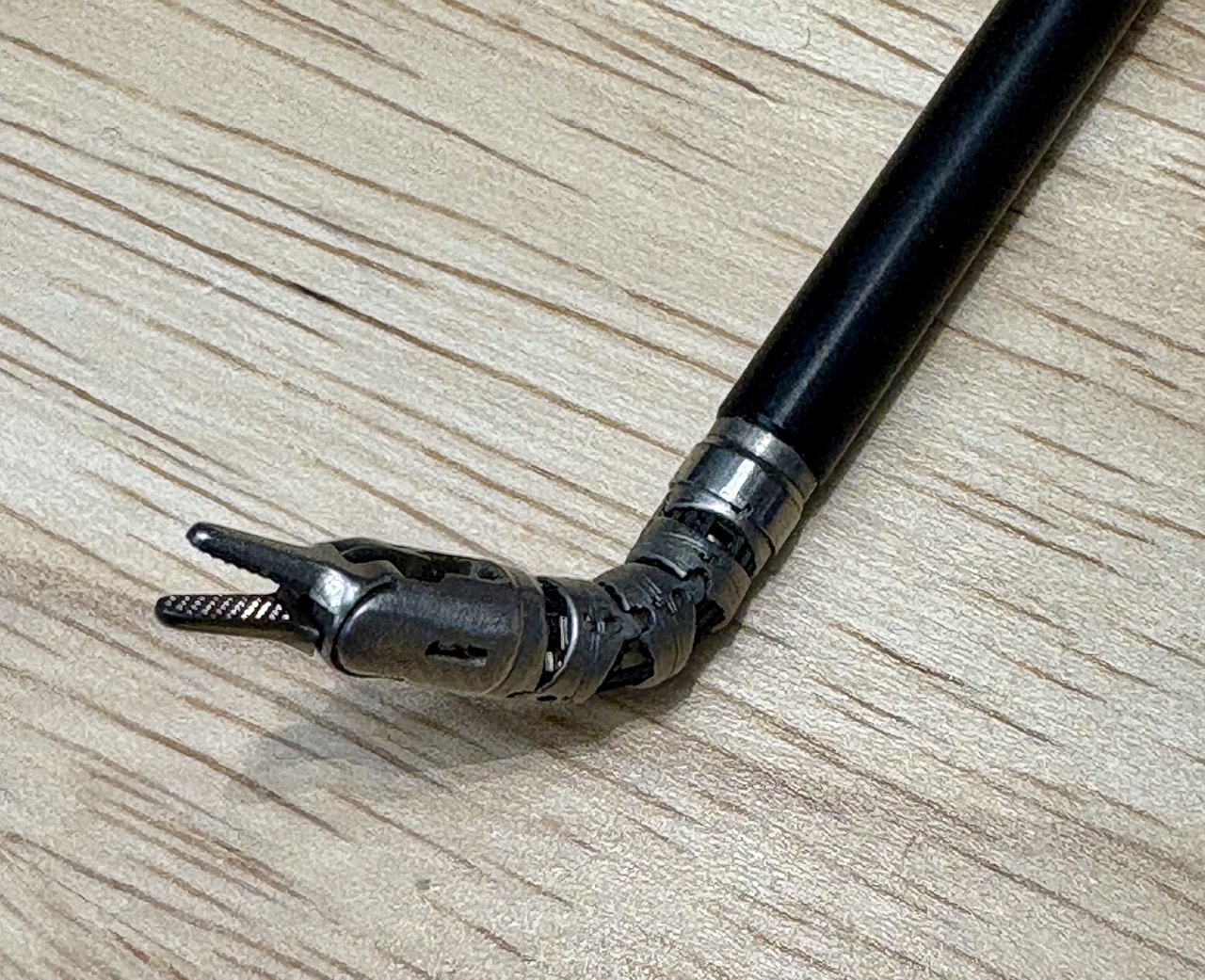
da Vinci 5 mm instrument wrist and tip
For energized instruments (see next section), the wrist has to include some electric insulators in the last joint. For a bipolar instrument, each jaw is isolated from the other and the rest of the instrument
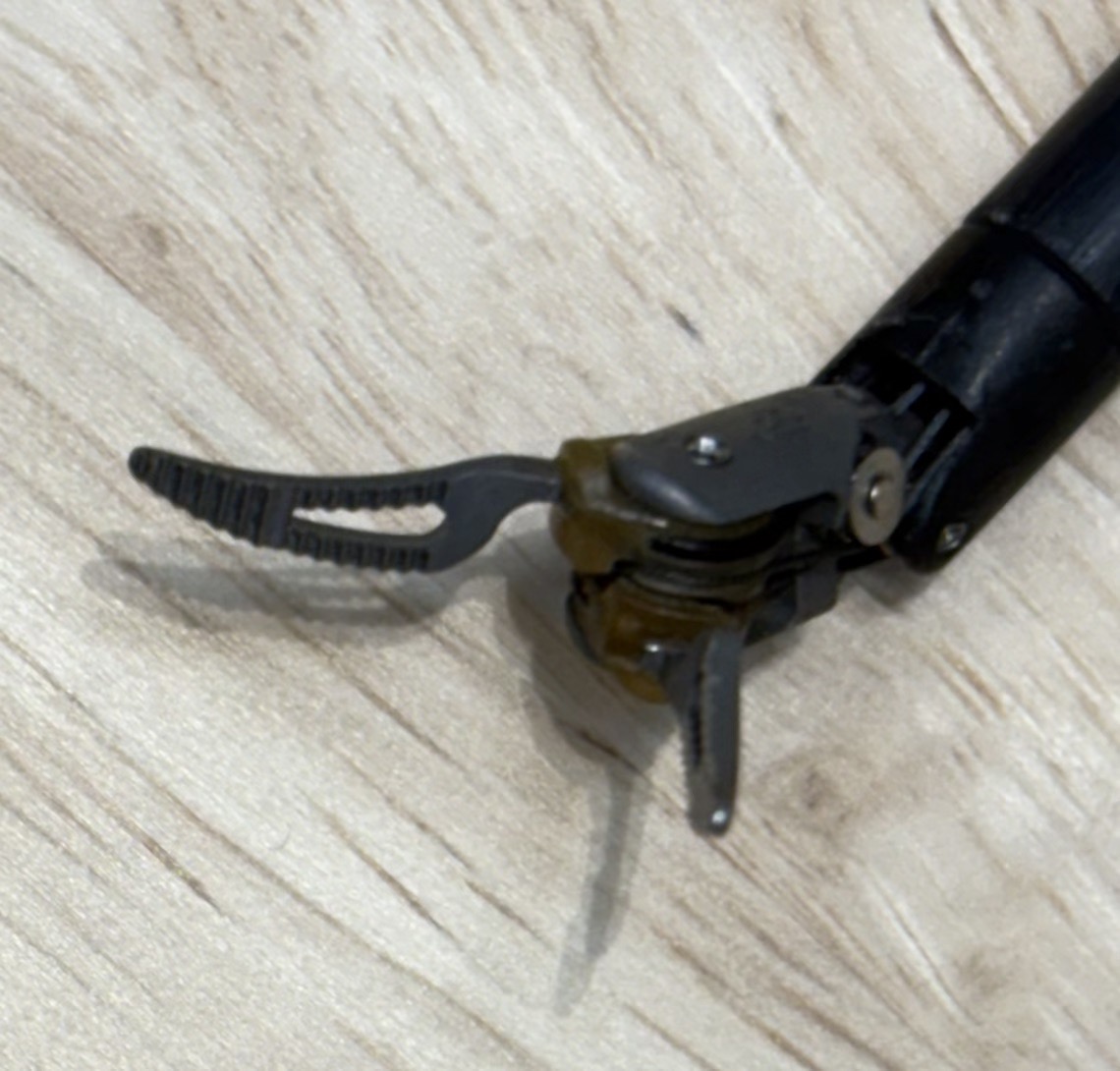
da Vinci bipolar wrist and tip
2.1.3.5. Energy
Some da Vinci instruments can be used for cauterization. There are two categories of energized instruments, monopolar and bipolar. Monopolar cauterization instruments can easily be identified by the single power pin that comes from the housing.
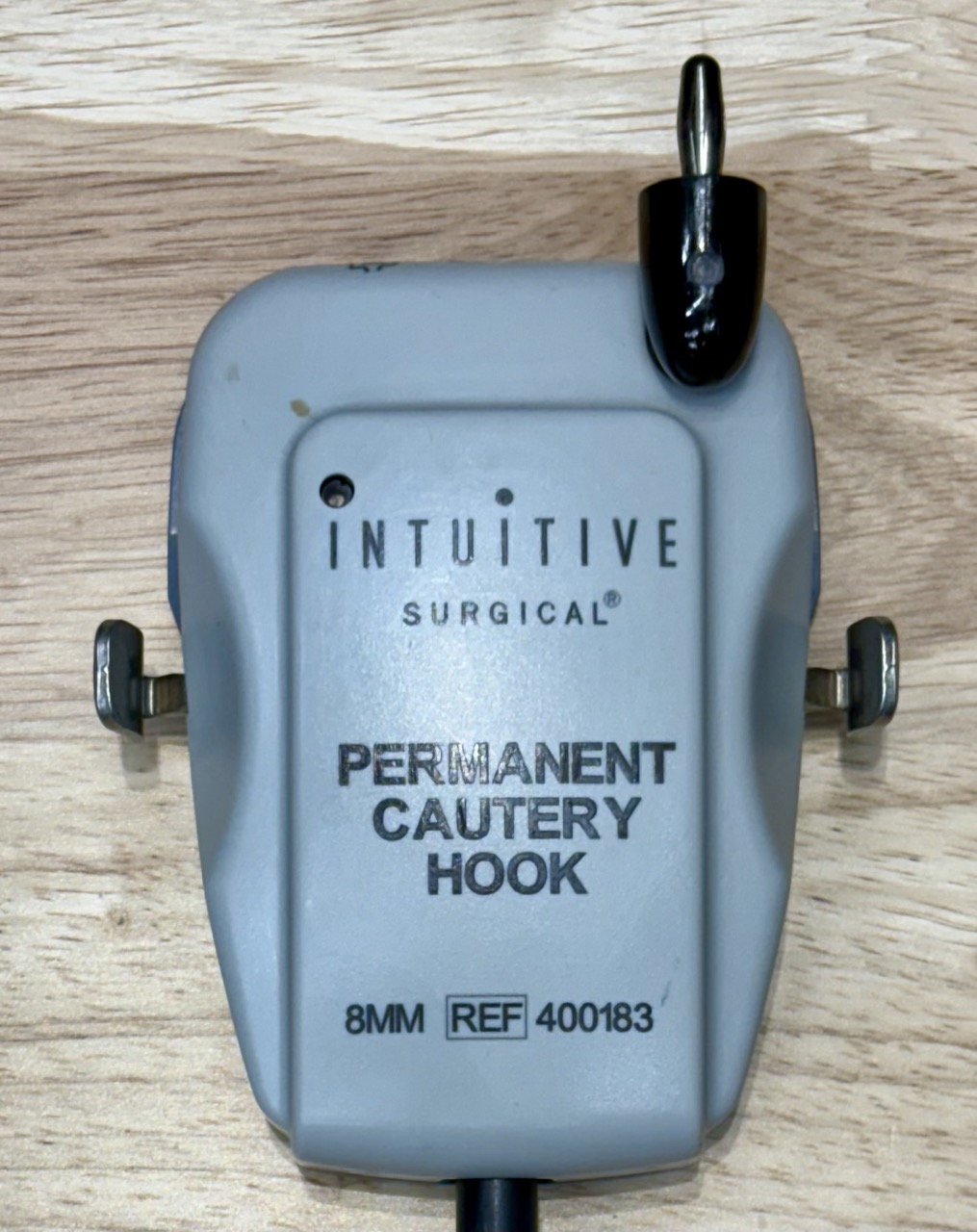
da Vinci Classic monopolar instrument, housing and connector
On the other hand, bipolar instruments have a connector with 2 pins.
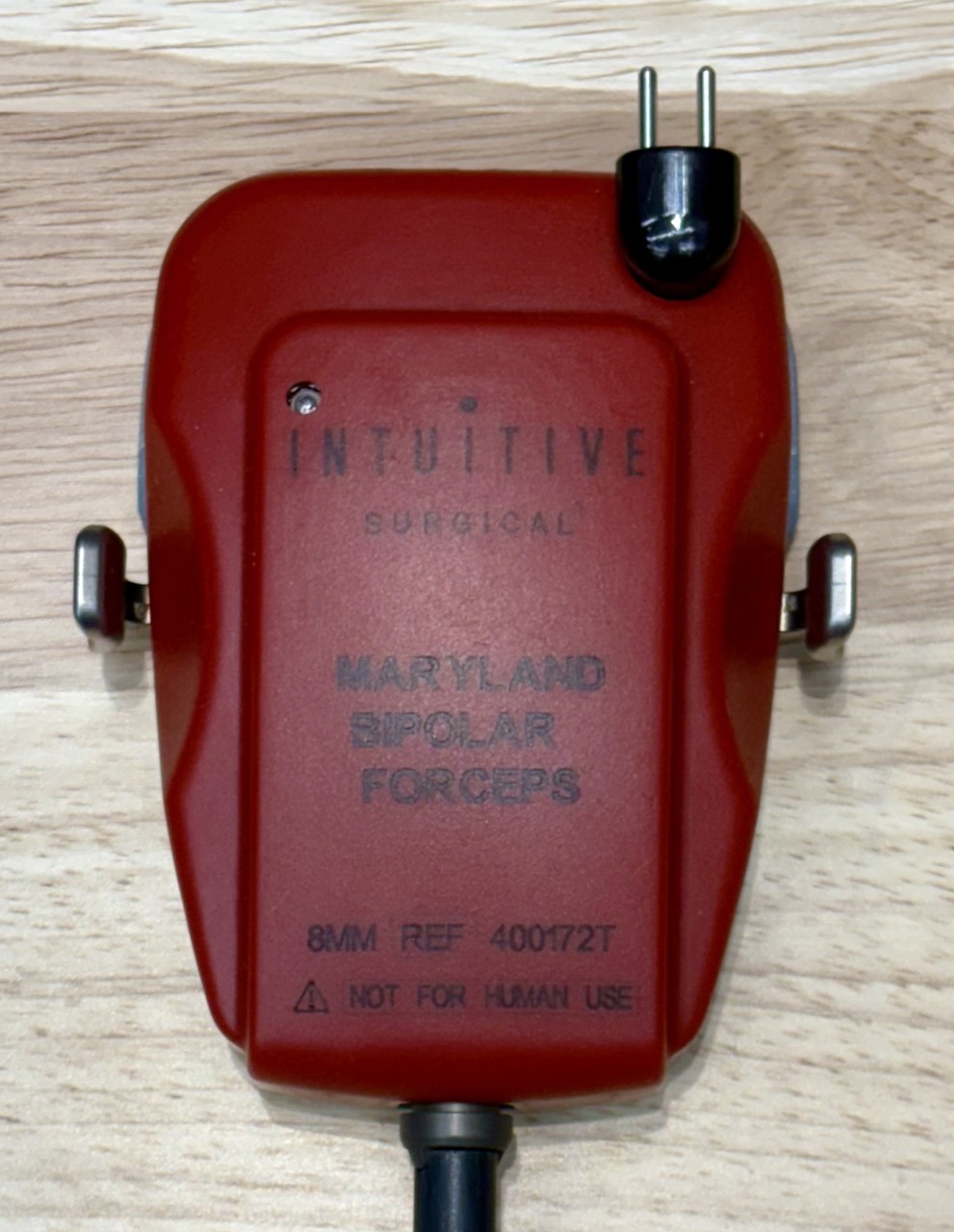
da Vinci Classic bipolar instrument, housing and connector
2.1.3.6. Newer Si instruments
ISI introduced a new mechanism for the instrument’s roll sometime around 2020. Instead of using a cable, the roll is now controlled using a gear. This affects the coupling matrix used to convert actuator to joint values. The scaling factor is different, and the direction is reversed. It is very important to make sure you have the correct instrument definition file. You can check if you have a “geared” instrument by looking at the mating disks or the revision number on the cover.
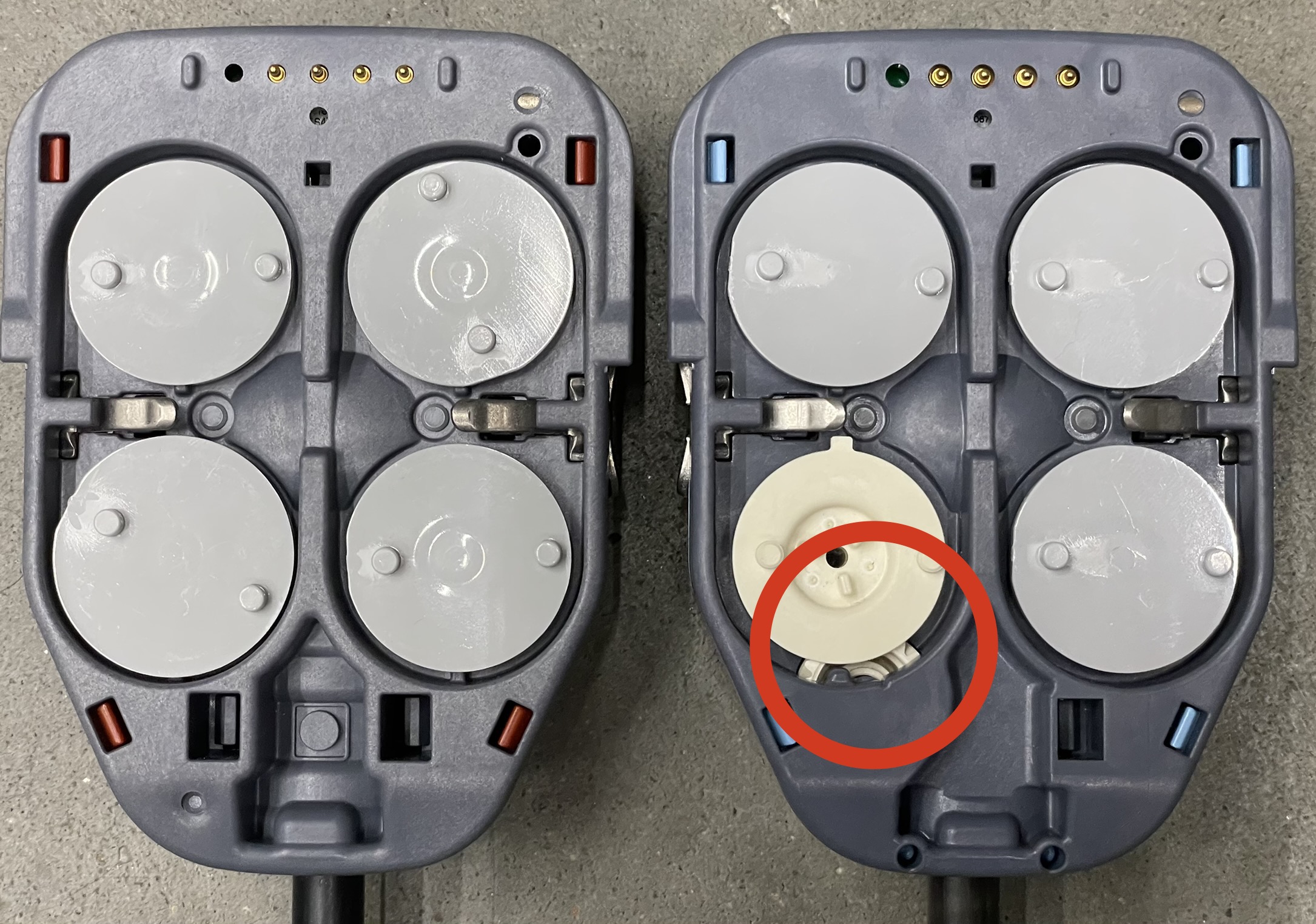
Large needle drivers with “traditional” cable-based and “new” gear-based roll mechanism
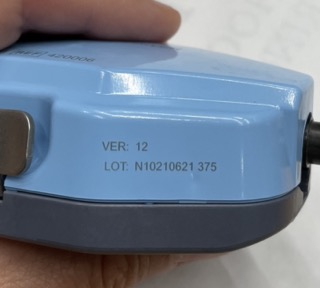
Large needle with “new” gear-based roll mechanism (“VER 12”)
Warning
If you are using a “geared” instrument and the cartesian motion doesn’t make any sense, it might be because the dVRK developers are not aware of this new revision. Let us know!