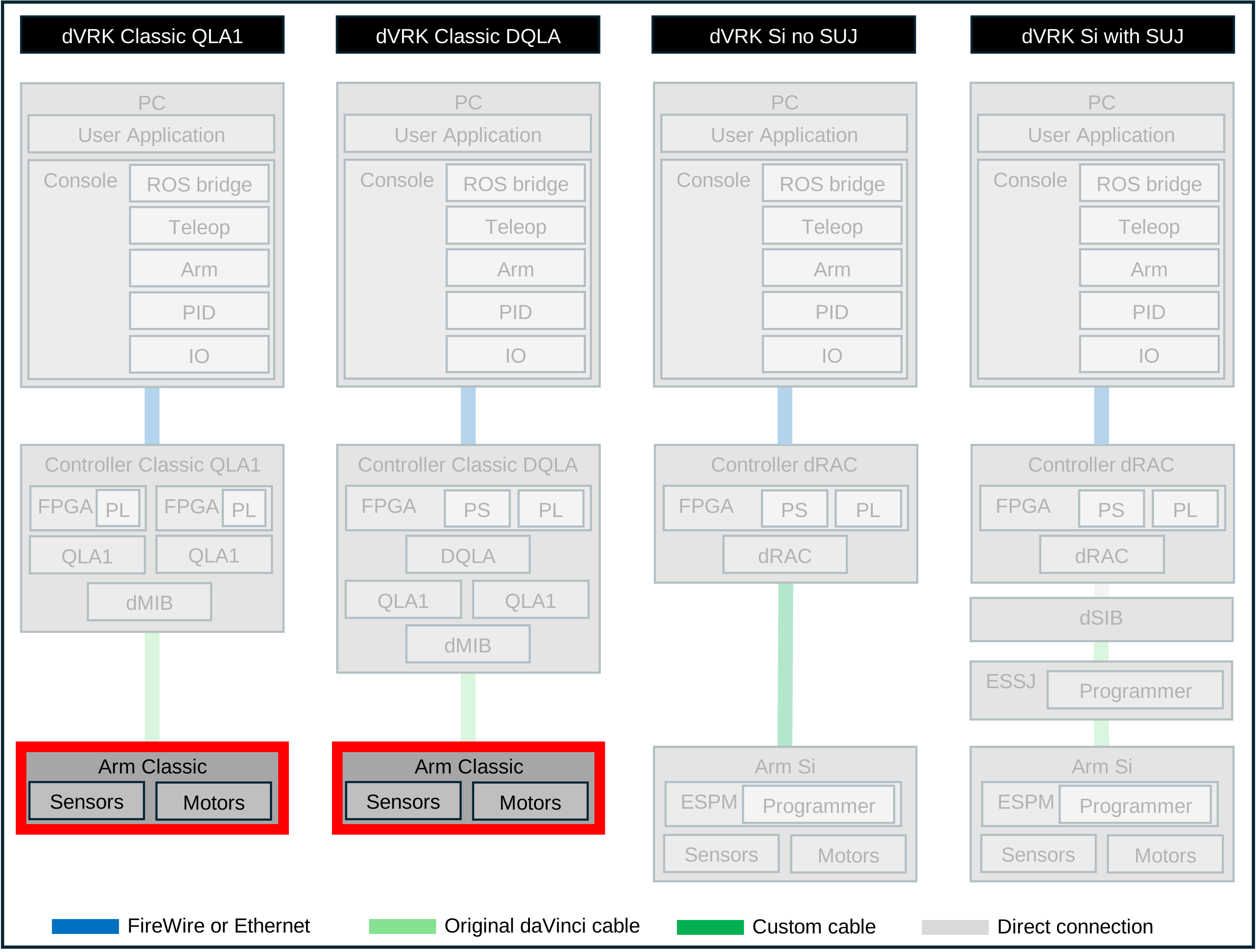
2.1.1.4. Endoscopic Camera Manipulator
Arm
The da Vinci Classic systems came with one ECM.
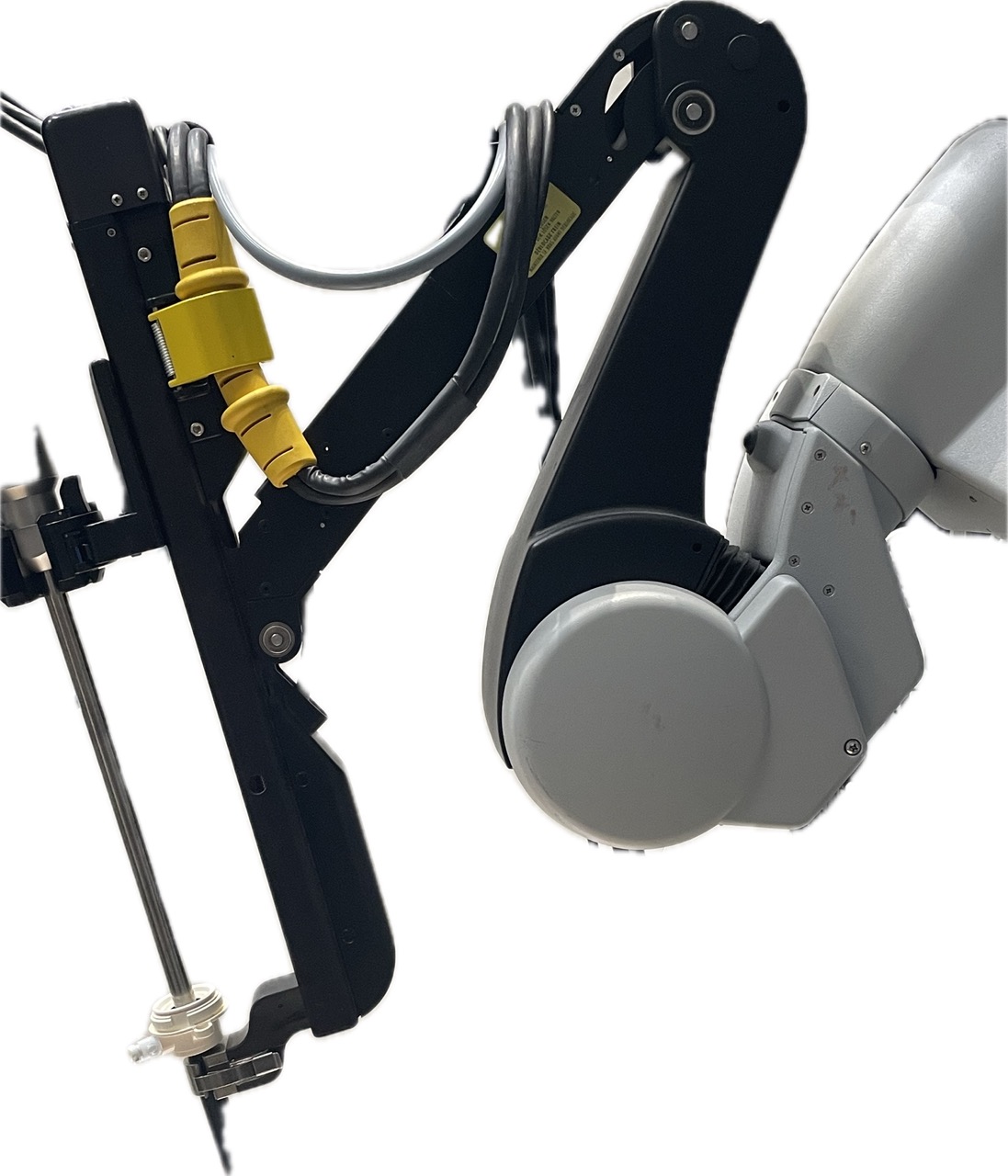
da Vinci Classic ECM
Basic information:
The arm is attached to the SUJ using 4 bolts. The mounting surface is tilted 45 degrees forward
4 motorized degrees of freedom, 4 actuators with optical encoders
The ECM is under-actuated
3 electric brakes on the first 3 joints to prevent the arm from falling when not powered
All actuators have analog potentiometers, used for both homing and safety checks
The second actuator controls a mechanical parallelogram used to enforce an RCM point (remote center-of-motion, aka fulcrum point). Google search.
The full kinematic chain is composed of two parts, the arm’s base with all the actuation (not sterilized) and a removable endoscope (sterilized)
There are three different types of endoscopes (straight, 30 degrees down or up)
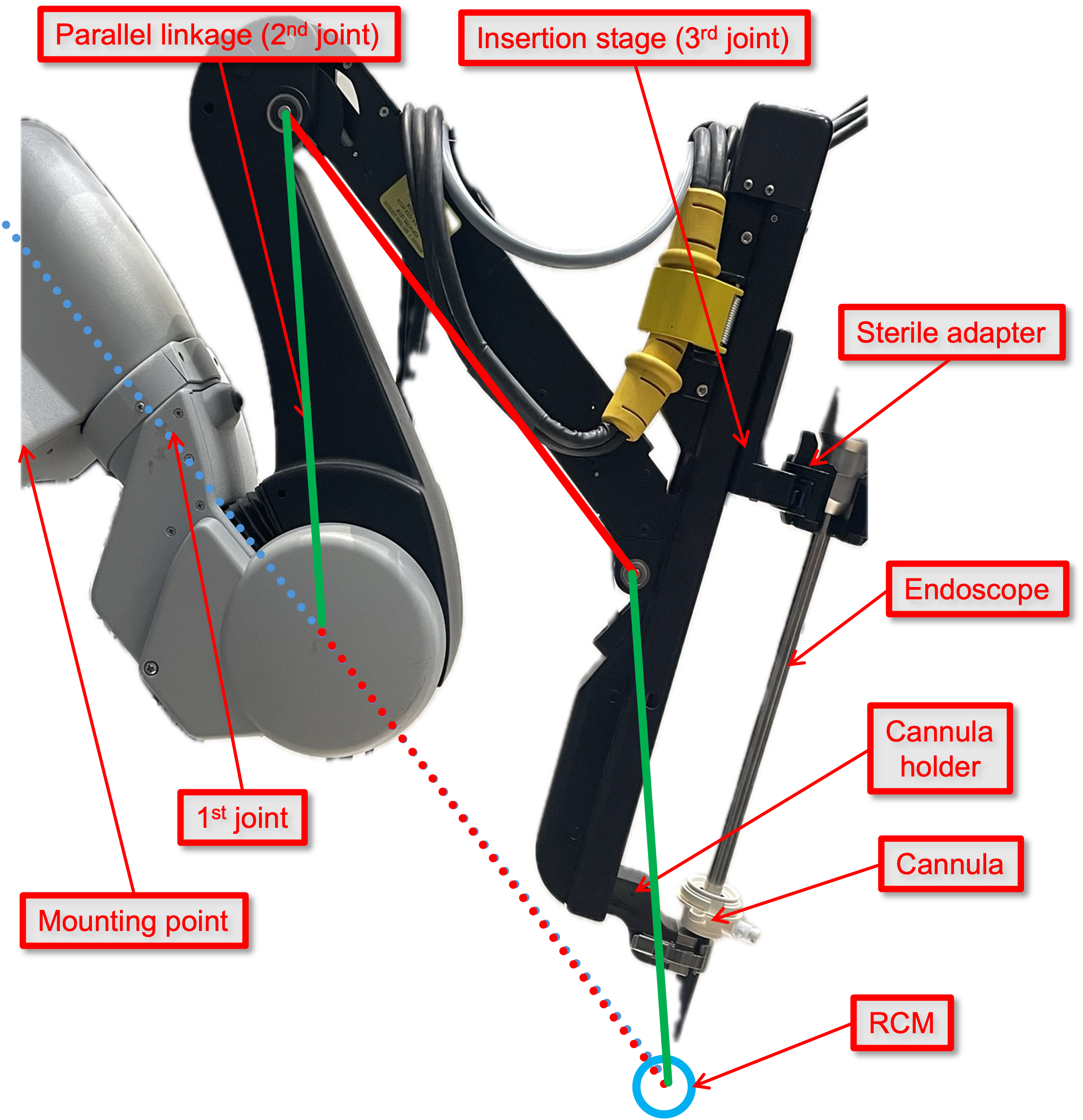
da Vinci Classic ECM labeled
Cannula and sterile adapter
Since the endoscope is removable and there is a barrier (sterile drape) between the sterile and non-sterile area, there are 2 distinctive points where the instrument is in contact with the arm. The instrument is attached to the base arm at the top of the insertion stage and guided along the cannula (trocar) at the bottom of the insertion stage.
There is a video at the end of this section describing the process.

Last active joint on ECM Classic
When prepared for surgery, a sterile drape covers the whole arm. The drape has an opening for the sterile adapter. The sterile adapter comes taped to the drape.

da Vinci Classic ECM with sterile adapter
At the bottom of the insertion stage, a cannula is attached to the arm via a cannula holder. The cannula is long enough to guide the endoscope through the RCM point, i.e. the point of entry in the patient.
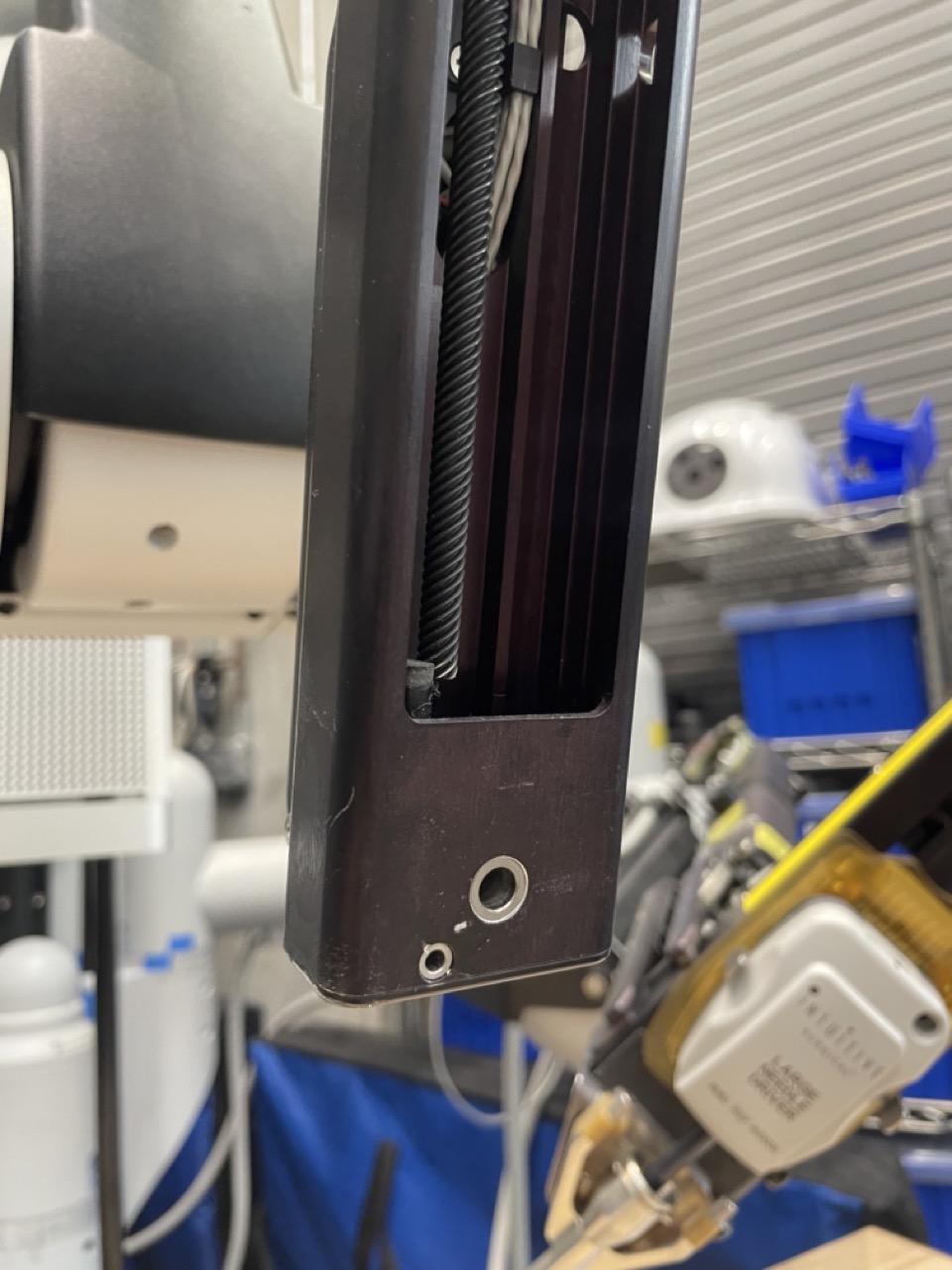
da Vinci Classic ECM cannula holder mounting point
The cannula holder is sterilizable and is attached to the base of the insertion stage using a fixed pin. To remove the cannula holder, there is a small button on the back of the insertion stage.
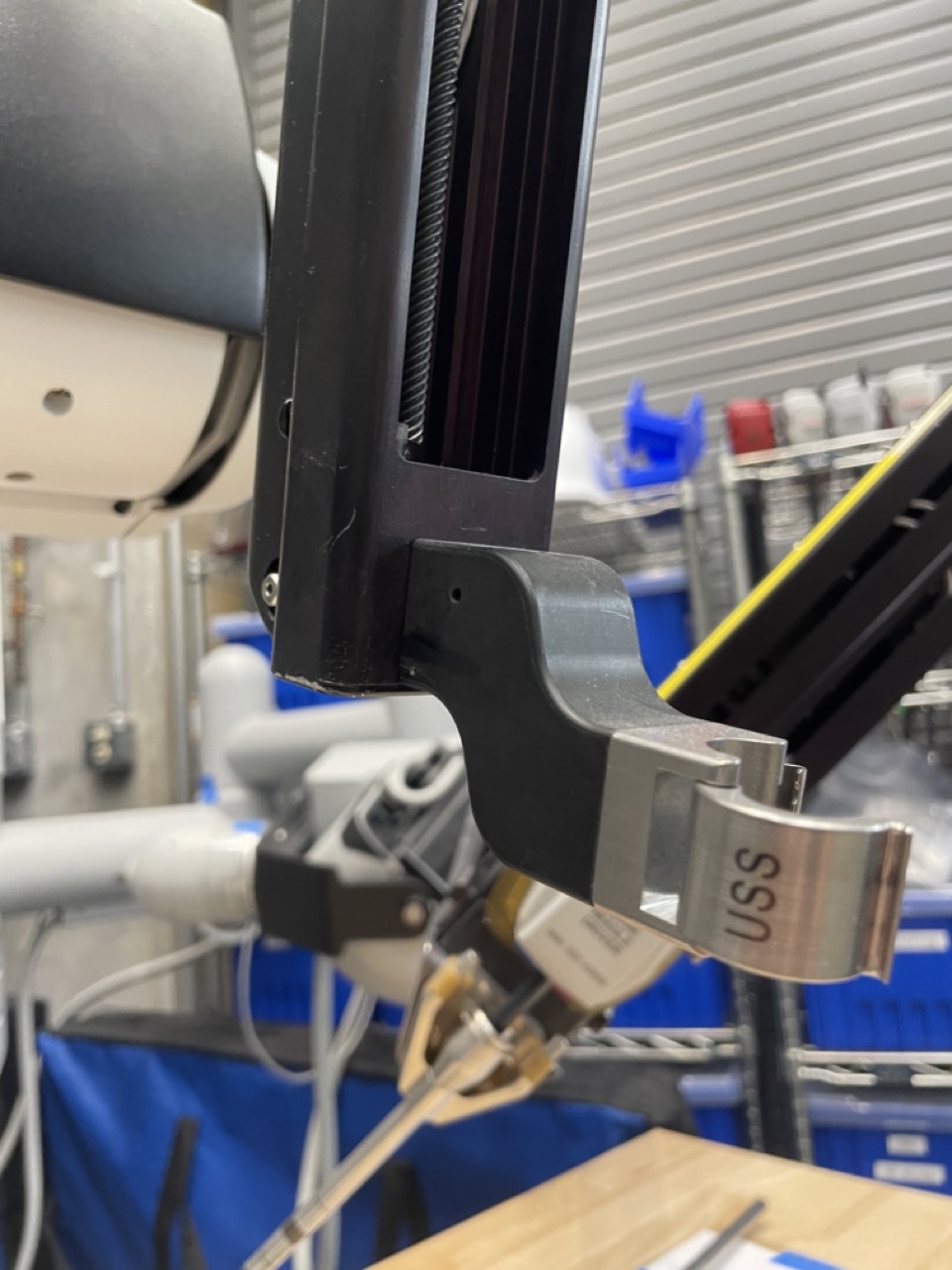
da Vinci Classic ECM cannula holder in place
The cannula is reusable and sterilizable. If you don’t have a cannula, you can use a piece of paper as a shim so you can lock the latch.
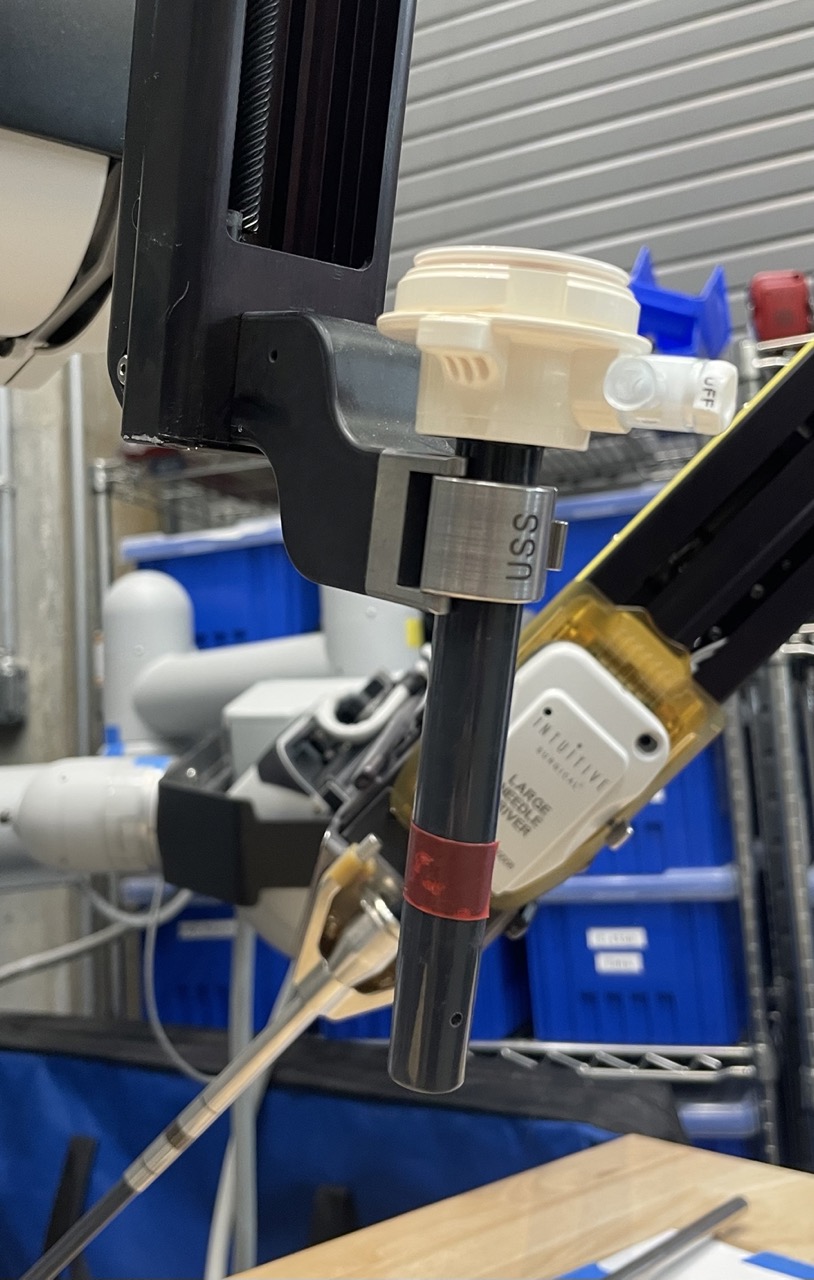
da Vinci Classic ECM cannula
The cannula is held by the cannula holder (shocking) and secured using a latch. Once the adapter and cannula are in place, one can insert the endoscope in the adapter.
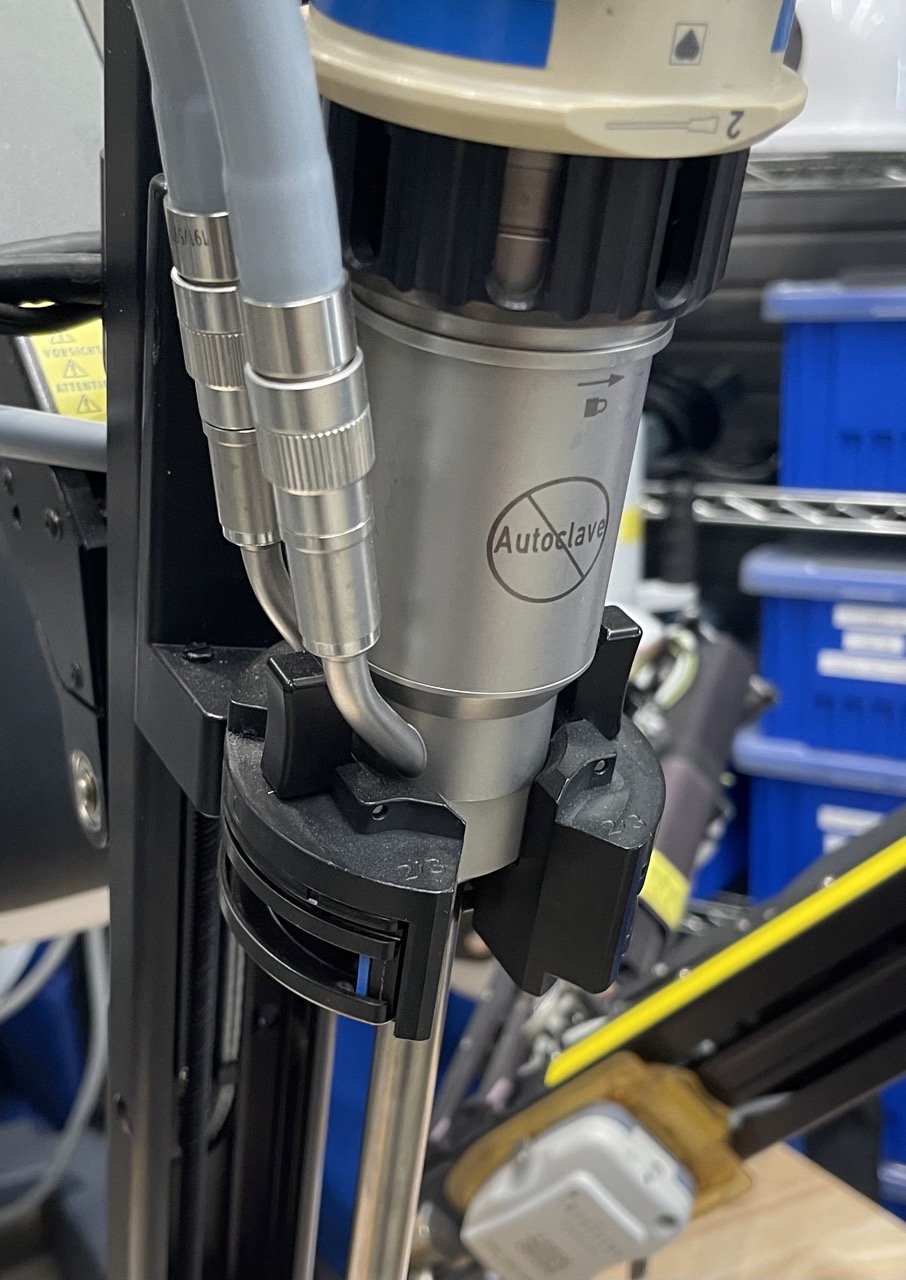
da Vinci Classic ECM with endoscope
Note
Video on YouTube demonstrating how the ECM Classic is prepared: https://youtu.be/jx0bB64NaPo