2.1.2.4. Set Up Joints
See SUJ Classic for overview.
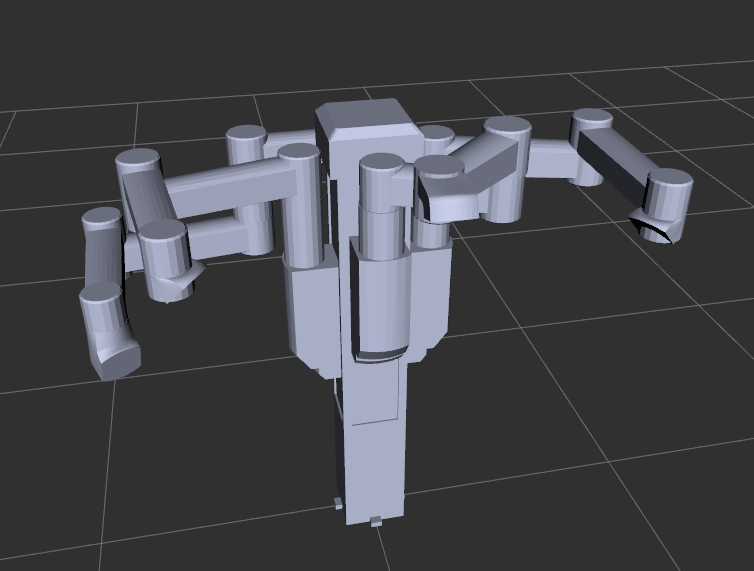
da Vinci Si, SUJ in RViz
Basic information:
The patient cart is on wheels and is motorized, so it can be moved in and out the operation room
There are four passive arms, one to hold the ECM (SUJ-ECM) and three to hold the PSMs (SUJ-PSM1, SUJ-PSM2 and SUJ-PSM3). A two PSMs model was also available, the da Vinci Si-E (no PSM3)
Each joint has an electric brake. The brakes are controlled per arm. For example, all the brakes on SUJ-PSM1 are released at the same time
The passive arm SUJ-PSM3 can be positioned on either side of the patient cart. The SUJ-PSM3 has latches on the back of the cart, one for the left position and one for the right position. In the pictures below, the SUJ PSM3 is coming on the left of the cart
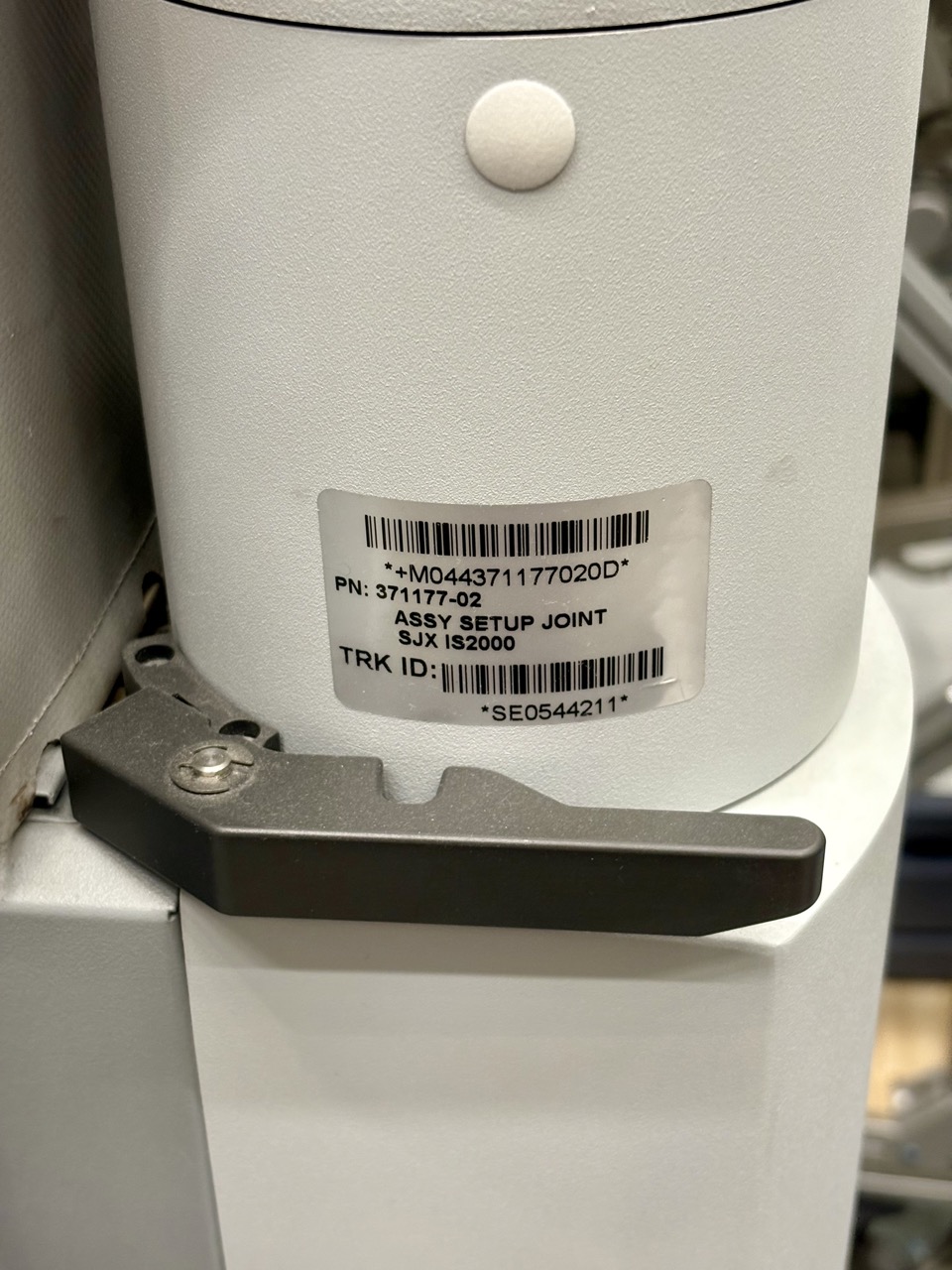
da Vinci SUJ PSM3, right locking mechanism not used
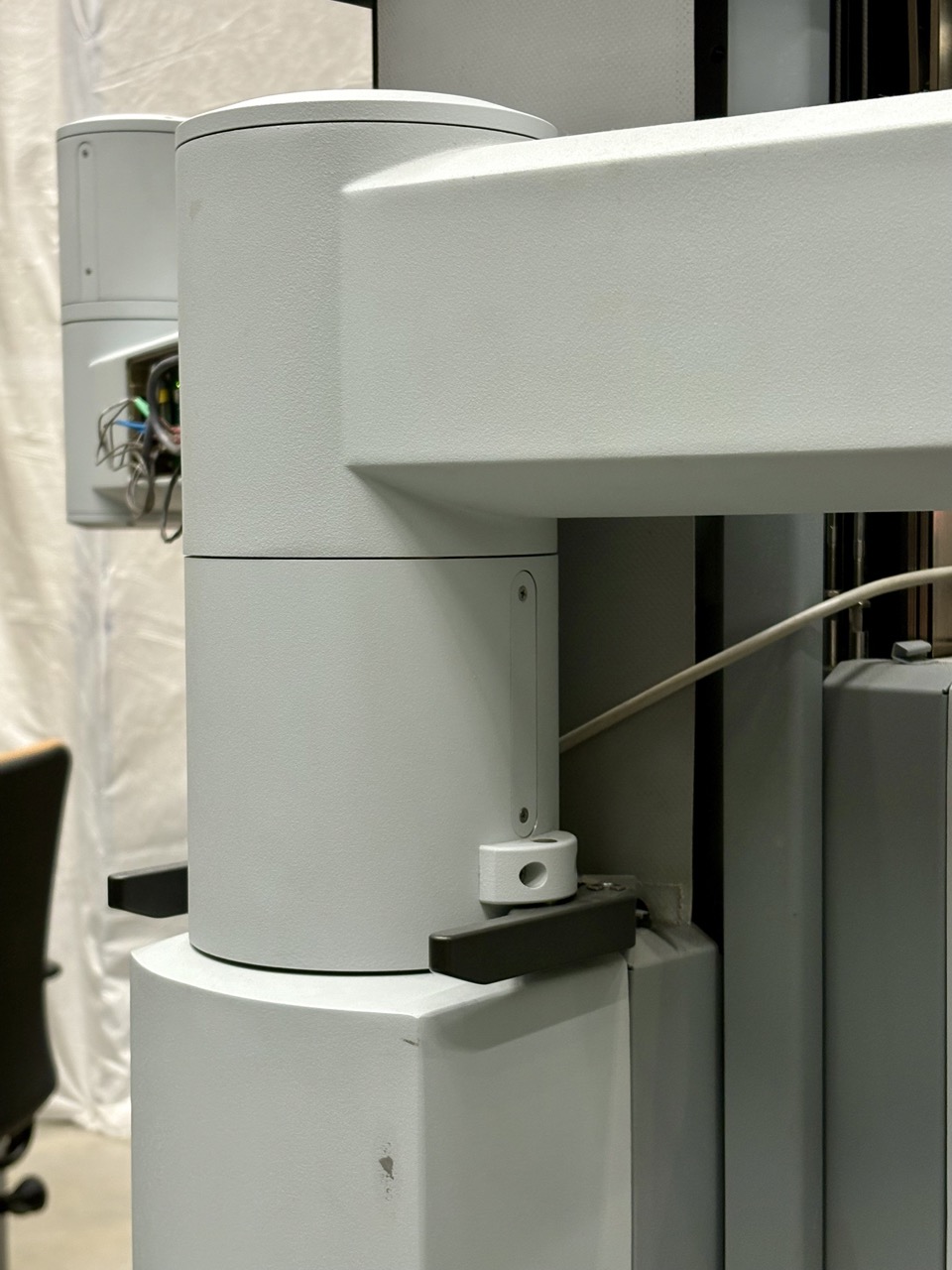
da Vinci SUJ PSM3, left locking mechanism used
There are no buttons to control the brakes on the SUJ, all the buttons are on the active arms
Each SUJ passive arm has a small board with analog-to-digital converters to read the joint potentiometers (ESSJ)