10.3.7. Custom components
10.3.7.1. Derived components
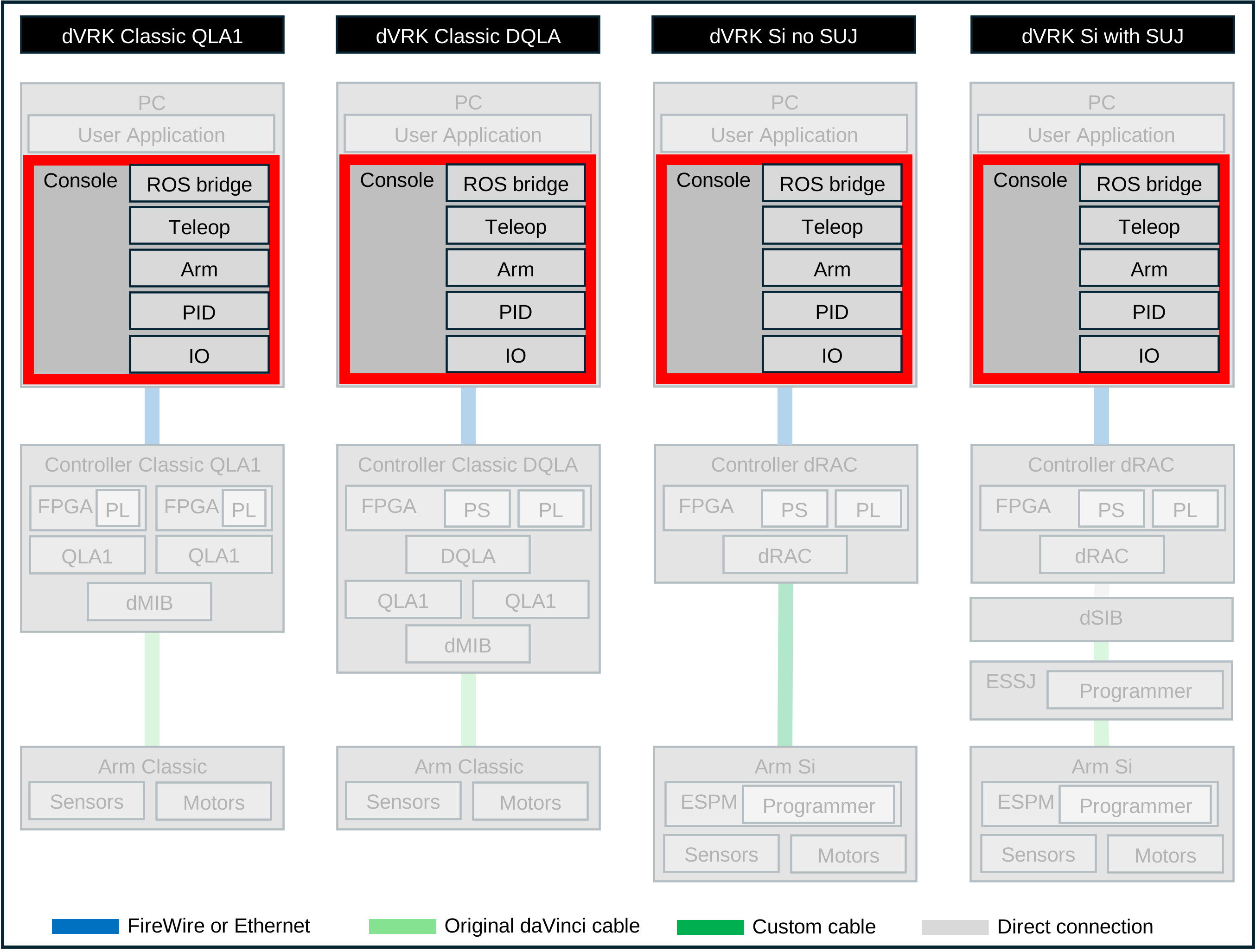
Since the dVRK stack relies on cisstMultiTask components (see tutorial), one can technically replace any existing component by their own. It’s possible but not necessarily easy nor the best approach. If your changes are modest, it might be easier to start from the existing component and alter it. The best way to do so is to derive from the default dVRK class. The main advantages of derived classes are:
All the interfaces (provided and required) the system expects are already defined, so the system can connect the existing ROS bridge (1 or 2), Qt widget, PID, IO, etc.
All the existing configuration parameters will still be there, so you can re-use them.
The code related the component creation is already defined in the base class, so you’ll have less code to manage.
As of 2023, the dVRK system supports derived classes for the arm and the PSM teleoperation. You can find documented examples for:
Derived
mtsTeleOperationPSMinexamples/derivedTeleOperationPSM(https://github.com/jhu-dvrk/sawIntuitiveResearchKit). This example hows a single derived C++ class.Derived
mtsIntuitiveResearchKitPSMinexamples/derivedPSMQtROS(https://github.com/jhu-dvrk/sawIntuitiveResearchKit). This example shows a derived C++ class as well as a custom Qt Widget and ROS bridge (ROS 1) so one can communicate with the derived class with custom messages.