3.4.1. Mount
Note
If you have a full Si patient cart (i.e., SUJ with PSMs and ECM), you can skip this section unless you plan to remove/swap an arm.
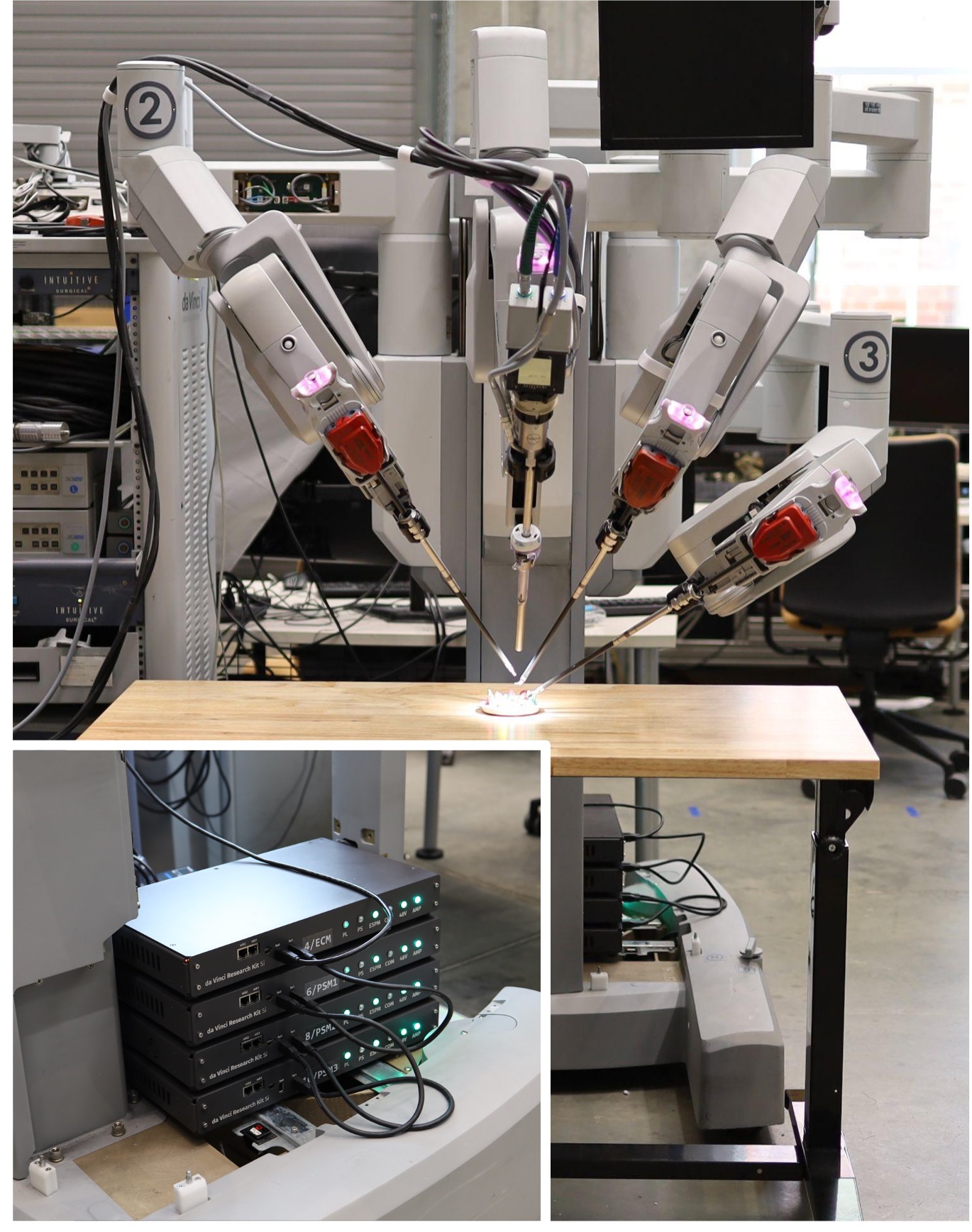
Full Si patient cart at JHU
On a full da Vinci Si, each arm on the patient side can be easily removed from the SUJ. The arm is secured using 4 long bolts.
Note
If the arm is folded, and you can’t access the bolts, you can force the arm to move despite the brakes. This is not something you should do too often, but it can help during the setup: YouTube video.
Once the bolts are removed, the arm simply slides out using two grooves on its internal walls. Please note that the passive arm has counterweights in the patient’s cart core column. When you remove the active arm (PSM or ECM), the corresponding SUJ passive arm will have a tendency to move up despite the brakes. You might want to strap the passive arm to the bottom of the cart to prevent this.
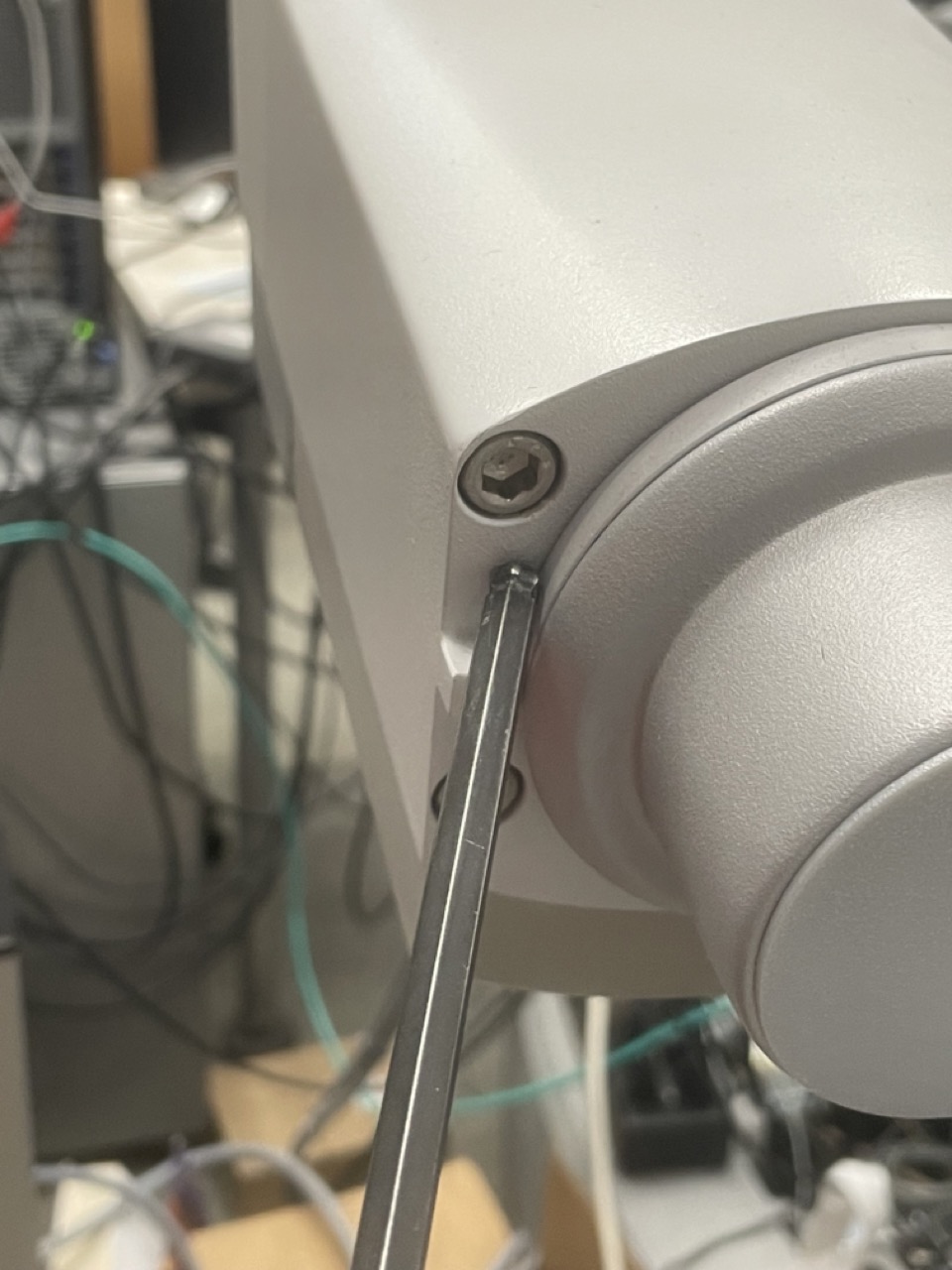
Long bolts securing the PSM/ECM Si
There is a mating bracket at the end of each SUJ arm with two side rails. For the connections, there are two D-sub connectors (one for motor power, one for data/LVDS) loosely mounted on the SUJ. When the arm is put back, the long pins on the SUJ connectors guide the arm’s D-sub connectors to make sure they properly align.
Intuitive Surgical can provide the mounting brackets, so one can create their own mount for the PSMs and ECM. The most common brackets are pulled from old clinical systems and are made of steel.
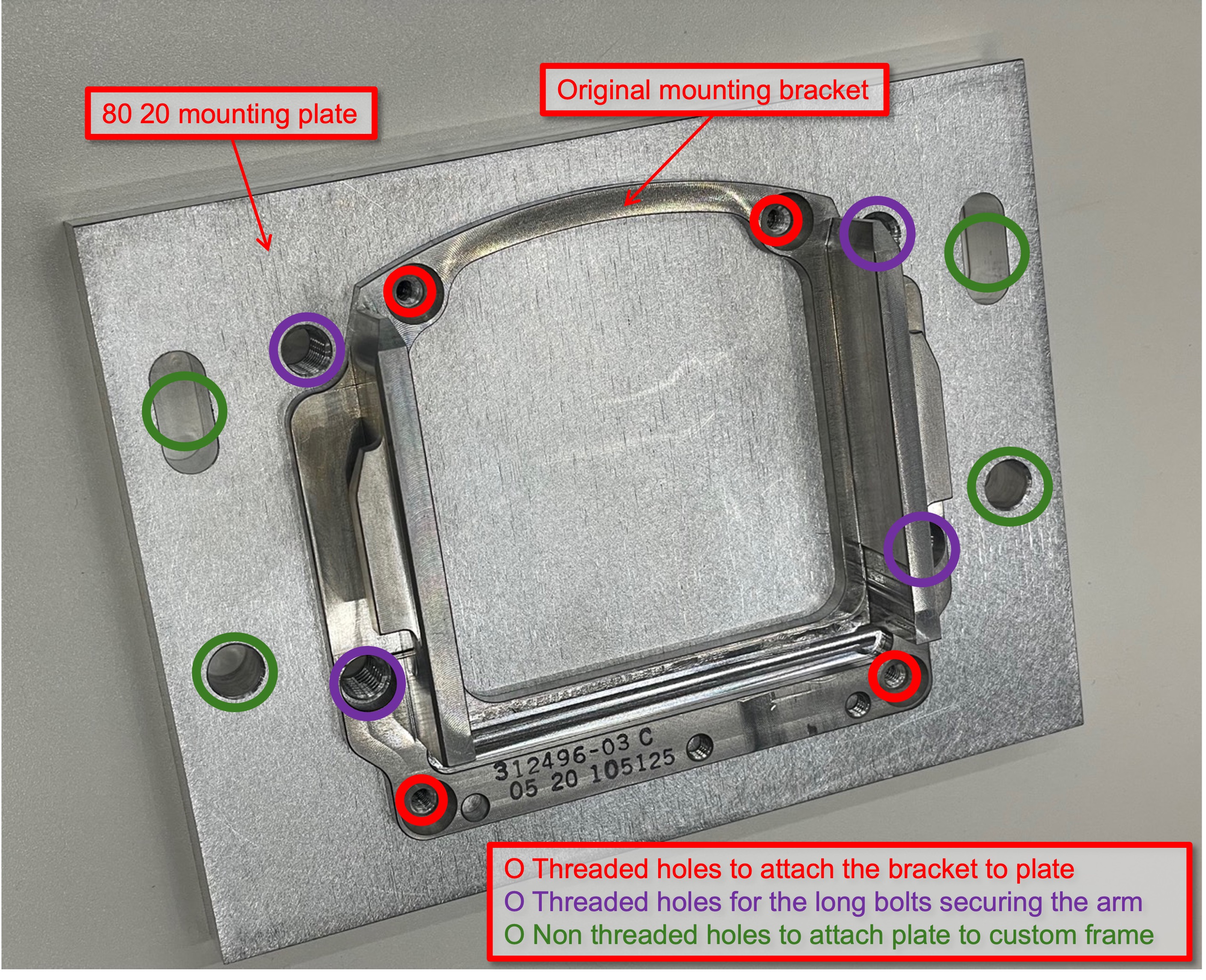
PSM/ECM Si steel mounting bracket and 80-20 plate
There are also some aluminum brackets, but these should be rare.
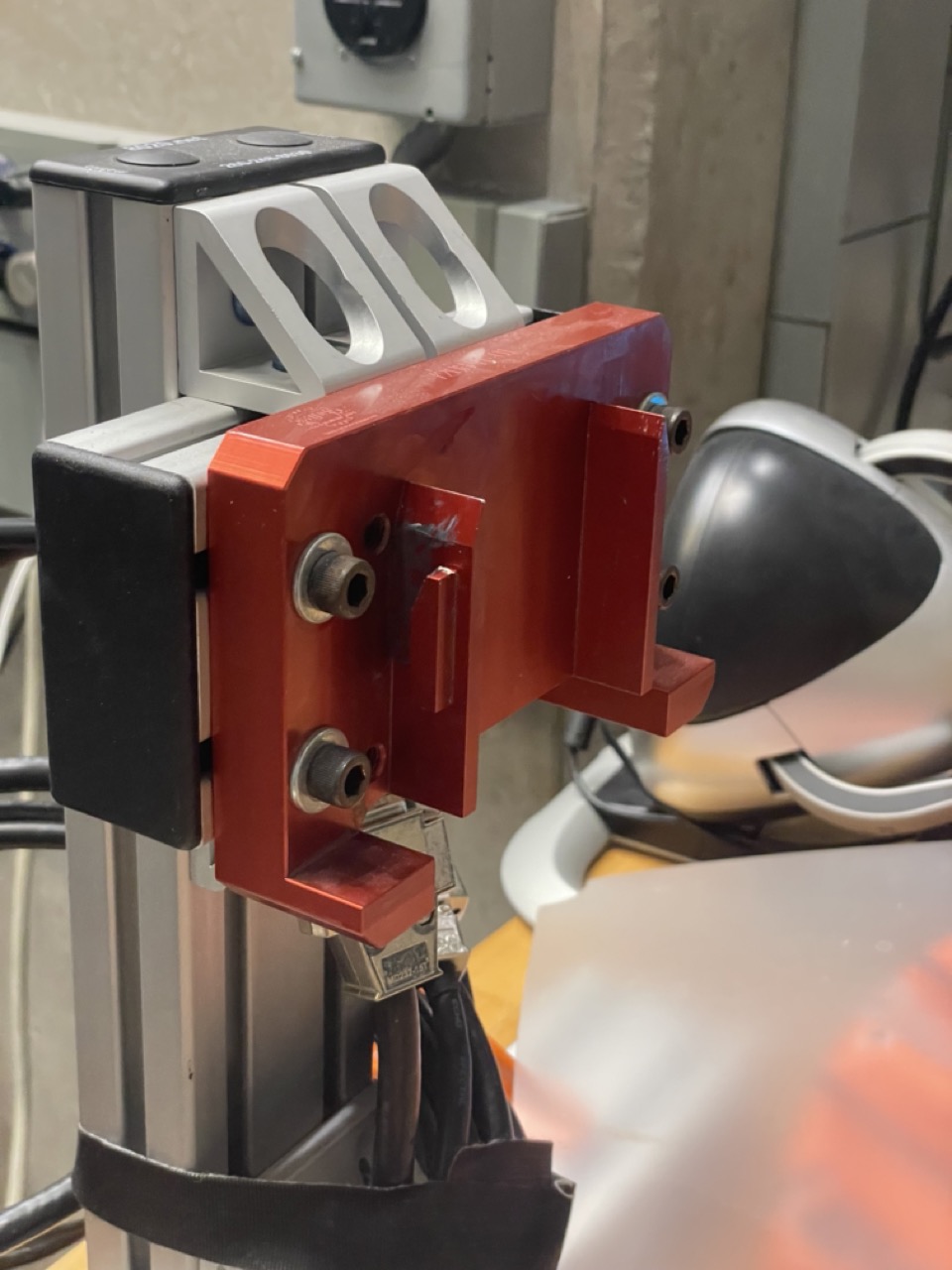
PSM/ECM Si aluminum mounting bracket
Once you have the parts to attach the PSM/ECM to a custom frame, you have multiple options. If you want a single PSM on a workbench or desk, you can build a very light frame.
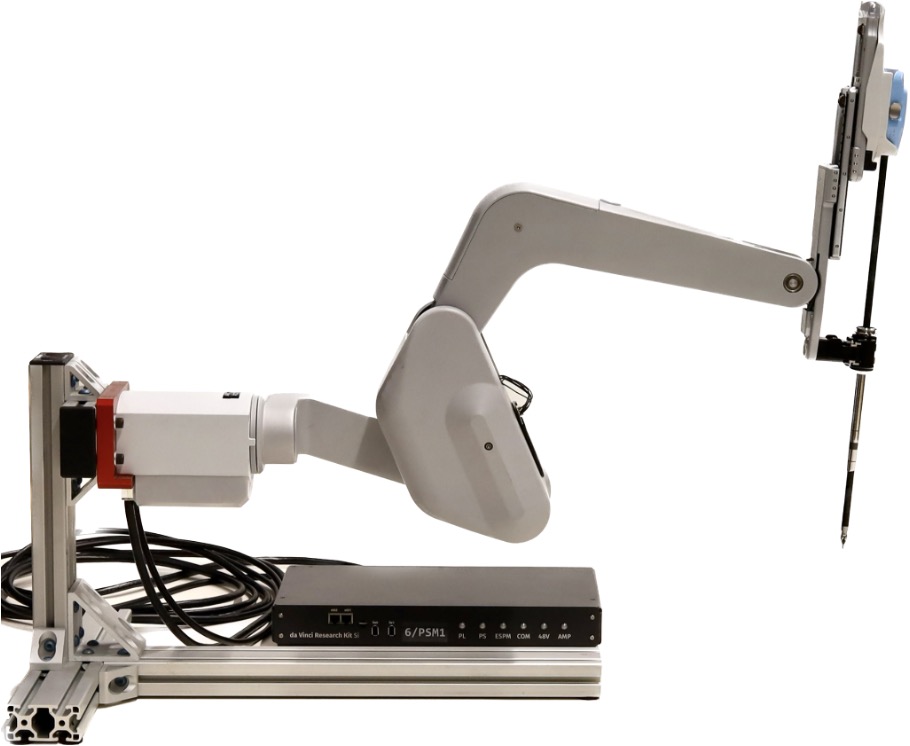
PSM Si on a standalone table frame
If you want to make a custom patient cart, we designed an articulated frame for one ECM and two PSMs using 80-20 profiles.
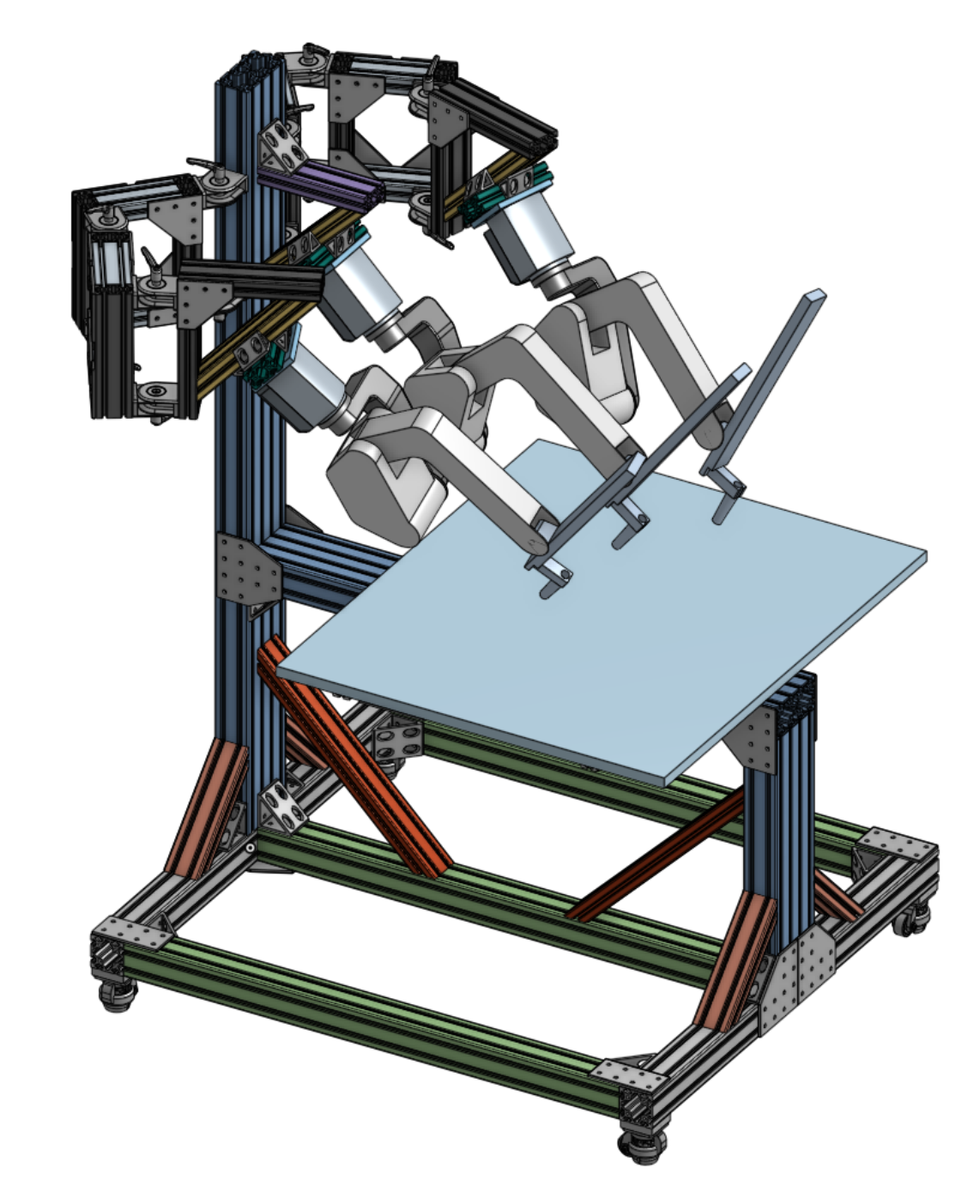
Si custom patient cart
More details can be found using the following links:
CAD on onshape.com and
bill of materials(courtesy of Yilin Cai at Georgia Tech)