10.4.2. Single arm
For each individual arm, the cartesian positions are based on:
DH parameters: defined in JSON files, used to compute the forward kinematics using joint positions
Tool tip offset (optional):
Defined in the kinematic JSON file,
tooltip-offsetis a constant offset appended at the end of the kinematic chain (PSM and ECM only, not MTM). The tooltip offset for the ECM is determined by the type of endoscope (straight, up, down) and automatically managed by the ECM arm class. The PSM tooltip offset is determined by the type of instrument (found inshare/tool).Most users should never deal with these, they are predefined for given PSM tools and ECM endoscopes
Base Frame (
base_framein your system JSON file):Prepended to the whole kinematic chain
Can be:
defined in the system JSON configuration per arm using
base_frameset at runtime by command or ROS topic
set_base_frame
For example, the MTM kinematic (DH parameters) start from the link 0,
i.e. close to the attachment point/shoulder (see
share/kinematics/mtmr.json in
https://github.com/jhu-dVRK/sawIntuitiveResearchKit) and has Z
pointing up, X to the left and Y towards the user. But the ISI
convention expects that X points to the left when viewed from the
stereo display, Y should point up and Z away from the user.
Furthermore, the ISI convention places the origin in the middle of the
stereo display (i.e. between the operator’s eyes). In practice MTMs
are always mounted rigidly to a frame, so we need to apply a constant
rotation and translation to match the ISI convention. The two masters
are also mounted apart from each other, so there is also a positive X
translation for MTML and a negative X translation for MTMR. The
change of reference frame should be defined using the base_frame
in the system configuration file (see
jhu-dVRK/system-MTMR-PSM1-MTML-PSM2-Teleop.json in
https://github.com/dvrk-config/dvrk_config_jhu).
For a change of reference frame at runtime one should use the
set_base_frame ROS topic. For example, this is used to make sure
the PSMs are always defined with respect to the endoscope tooltip
(camera frame) if the camera can move (i.e. mounted on an ECM or other
robot).
To summarize:
When used with the setup joints, the system class propagates the different base frames to make sure the PSMs are defined with respect to the camera frame (see SUJ).
If you have an ECM and don’t have access to the setup joints but have a way to register the PSMs to the camera/ECM, you should use the SUJ Fixed class. We offer a simple method to register the PSMs to the ECM: https://github.com/jhu-dvrk/dvrk_camera_registration
Finally, if the camera is fixed, you can use
base_framein your system configuration (similar to MTMs, seejhu-dVRK/system-MTMR-PSM1-MTML-PSM2-Teleop.jsonin https://github.com/dvrk-config/dvrk_config_jhu). Note that thebase_framedepends on where your PSMs are mounted with respect to your fixed camera.
There are two possible cartesian positions to query:
measured_cp:base_frame * DH * tooltip-offsetlocal/measured_cp:DH * tooltip-offset
10.4.2.1. Surgeon’s side
The base frames defined in the system.json are such that the MTM
tips (grippers) are defined with respect to the stereo display. By
default, we assume the stereo display is pointing down with a 60-degree
angle from the horizontal. This is the orientation of the HRSV
on the Standard (aka Classic) and S da Vinci systems. If your display
is mounted at a different angle, adjust your system.json
accordingly.
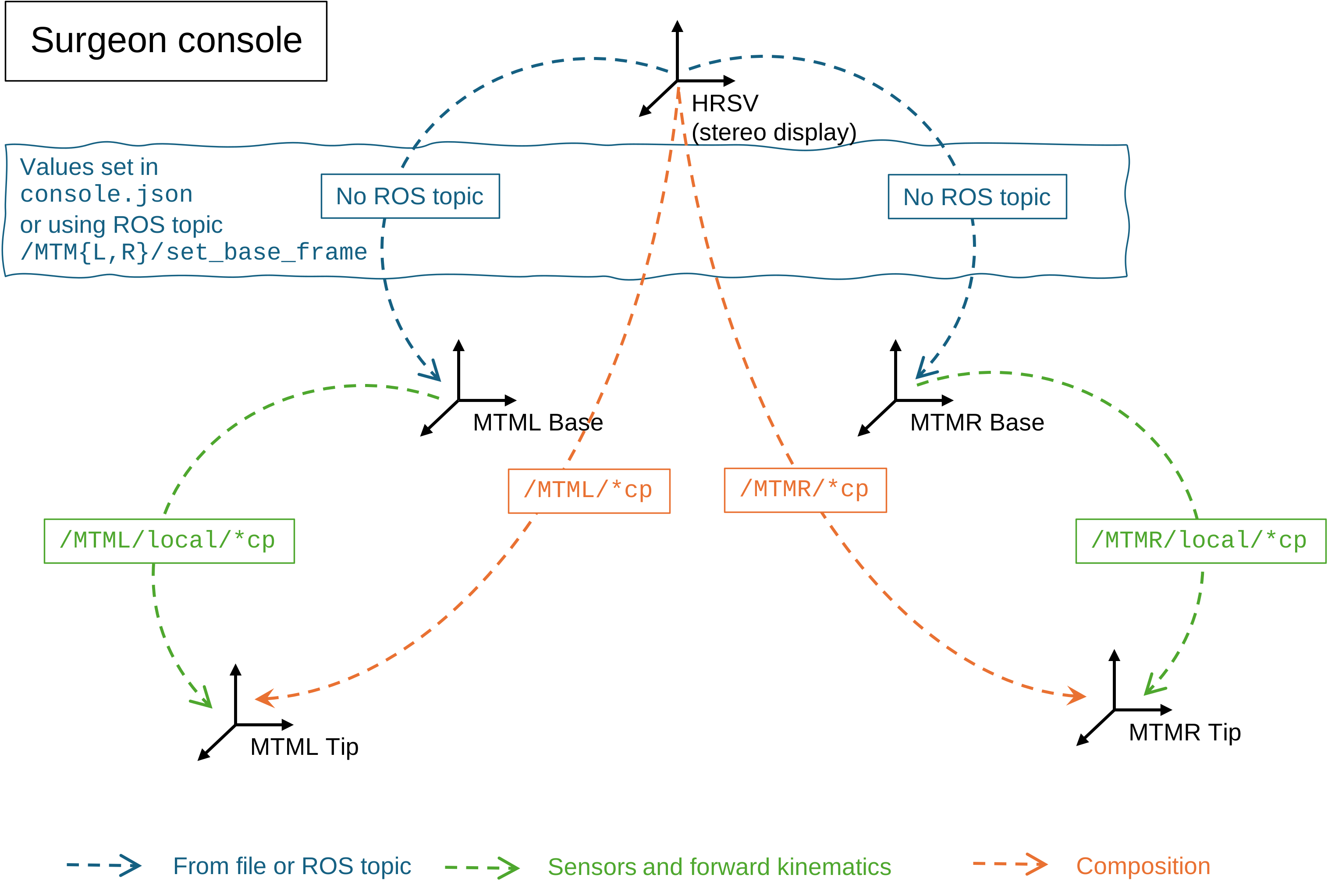
Surgeon’s side transformations
10.4.2.2. Patient’s side
The base frames defined in your system.json depend on how your
PSMs are mounted. If you have a fixed camera, you can use or hand-eye
calibration method:
https://github.com/jhu-dvrk/dvrk_camera_registration. If you have an
ECM, see SUJ.
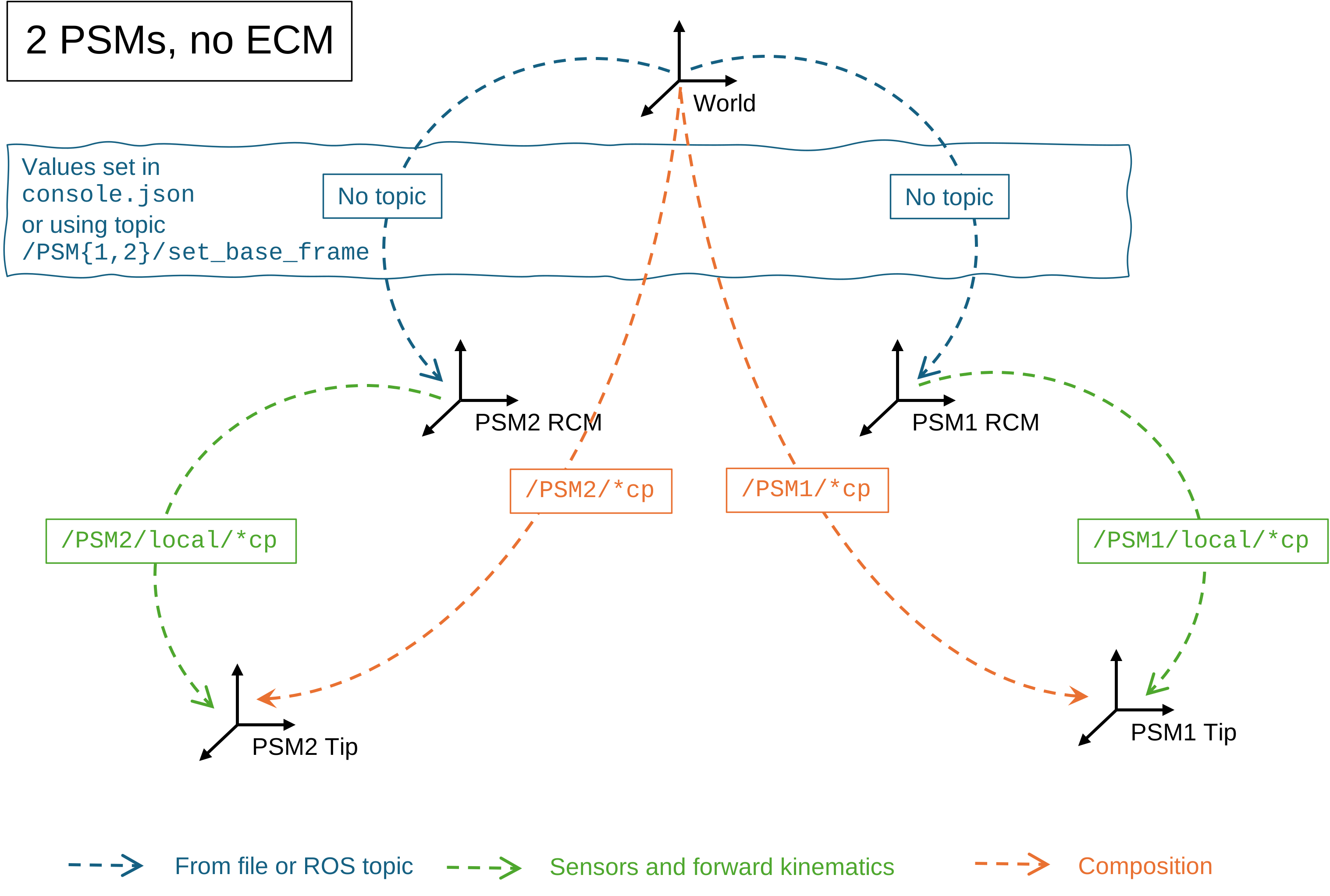
Patient’s side without any type of SUJ